|
Making everyday messages cut through ͏ ͏ ͏ ͏ ͏ ͏ ͏ ͏ ͏ ͏ ͏ ͏ ͏ ͏ ͏ ͏ ͏ ͏ ͏ ͏ ͏ ͏ ͏ ͏ ͏ ͏ ͏ ͏ ͏ ͏ ͏ ͏ ͏ ͏ ͏ ͏ ͏ ͏ ͏ ͏ ͏ ͏ ͏ ͏ ͏ ͏ ͏ ͏ ͏ ͏ ͏ ͏ ͏ ͏ ͏ ͏ ͏ ͏ ͏ ͏ ͏ ͏ ͏ ͏ ͏ ͏ ͏ ͏ ͏ ͏ ͏ ͏ ͏ ͏ ͏ ͏ ͏ ͏ ͏ ͏ ͏ ͏ ͏ ͏ ͏ ͏ ͏ ͏ ͏ ͏ ͏ ͏ ͏ ͏ ͏ ͏ ͏ ͏ ͏ ͏ ͏ ͏ ͏ ͏ ͏ ͏ ͏ ͏ ͏ ͏ ͏ ͏ ͏ ͏ ͏ ͏ ͏ ͏ ͏ ͏ ͏ ͏ ͏ ͏ ͏ ͏ ͏ ͏ ͏ ͏ ͏ ͏ ͏ ͏ ͏ ͏ ͏ ͏ ͏ ͏ ͏ ͏ ͏ ͏ ͏ ͏ ͏ ͏ ͏ ͏ ͏ ͏ ͏ ͏ ͏ ͏ ͏ ͏ ͏ ͏ ͏ ͏ ͏ ͏ ͏ ͏ ͏ ͏ ͏ ͏ ͏ ͏ ͏ ͏ ͏ ͏ ͏ ͏ ͏ ͏ ͏ ͏ ͏ ͏ ͏ ͏ ͏ ͏ ͏ ͏ ͏ ͏ ͏ ͏ ͏ ͏ ͏ ͏ ͏ ͏ ͏ ͏ ͏ ͏ ͏ ͏ ͏ ͏ ͏ ͏ ͏ ͏ ͏ ͏ ͏ ͏ ͏ ͏ ͏ ͏ ͏ ͏ ͏ ͏ ͏ ͏ ͏ ͏ ͏ ͏ ͏ ͏ ͏ ͏ ͏ ͏ ͏ ͏ ͏ ͏ ͏ ͏ ͏ ͏ ͏ ͏ ͏ ͏ ͏ ͏ ͏ ͏ ͏ ͏ ͏
|
Kia ora friend, Why do we share content? And what does that little act quietly say about us? I’m glad you ask. Cos I’ve been thinking about this a lot recently, particularly in light of a recent rise in ‘social media isn’t social anymore’ takes, which I think completely miss the mark. I’d argue what we have now is still very social, but just asynchronously social - networked, participatory, identity-expressive, collective, but just operating on a delay, and often behind closed doors. I reckon sharing into a group chat is the modern equivalent of saying: “Have you seen this newspaper article?”, which used to happen over the breakfast table, and now happens digitally. And when we share, we’re passing content along, yes, but also signalling something about ourselves. Every link, clip or screenshot is an act of self-presentation - a subtle way of saying: This is me, this is what I value, this is my taste, my humour, my view of the world. Same as we’d read out only the newspaper headlines that tickled or outraged us. So what does this mean for organisations? I think it means designing content that can operate as a personal statement - something people want to send to others because it says something about them, rather than about you. And we need to think about what that might look like in the context of our organisation. If we can do this, our ability to reach across networks (public and private) will open up. Cheers,
Seamus Boyer 👋
|
|
“Our storytelling is always shaped by the medium in which we communicate … Now we’re in this algorithmic medium where the way we communicate is shaped by the algorithm, it’s respondent to what the algorithm rewards, and in the end that’s always engagement optimisation.” - Adam Aleksik
|
|
Today I’m chatting with Trent Hile, Senior Social & Digital Media Advisor at Sydney Water. I was recommended their socials by a person who is among the absolute best in the biz (thank you!), and once I had a look I could see why. The content is smart, fun, consistent, and so, so focused. Which is what this interview is all about. Enjoy. 👇👇👇
|
|
Firstly, Trent, where do you work, and what do you do? I’m the Senior Social and Digital Media Advisor at Sydney Water. I’ve been in the role for nearly four years now. Previously I’ve worked in similar digital content roles in politics and transport, but my background is in sports journalism – so you’ll often see that passion find its way into our socials around major sporting events.
What’s the team set-up? We’ve got a team of five at present: our Digital Lead who focuses on strategy, tools and insights across our wider digital channels, myself, two multimedia advisors who specialise in videography and help develop content, and a senior digital advisor who manages our paid campaigns and influencers. Describe your strategy - what is Sydney Water trying to achieve with its socials? In terms of what we’re trying to achieve: it varies depending on the topic – but at the heart of it, our goals are to educate, drive behavior change and build trust and advocacy in our brand. Our strategy to achieve these: humanise the brand by communicating in a way that’s relatable and authentic, and primarily posting content which entertains (especially through humour) in order to achieve reach and cut-through with our messages.
|
|
|
Trent on the tools for Sydney Water. |
|
|
What does success look like? How are you measuring results - both officially and unofficially? Officially, success against our business goals (water literacy, behaviour change, brand trust, trust in tap water etc) are measured through customer tracking research conducted by our internal research and insights team. If we’ve implemented a successful social media campaign, we’ll usually see that reflected in the reporting – so we have a fair idea whether or not we’re shifting the dial. Unofficially, it’s hard to quantify. I can certainly tell you when a post has gone great or performed poorly, but we don’t really have a baseline figure for what constitutes a good post as it varies so much between platforms and topics. Obviously we have a higher benchmark for memes and entertaining content versus our BAU stuff that isn’t quite as sexy. We look at typical metrics like impressions, engagements and shares, track our videos on average watch time and completion rate, and look at comment sentiment within individual posts to see whether our message has resonated. Based on your posts it looks like you have pretty focused content themes - what are the pillars or set themes you’re trying to highlight? Our key content pillars are water literacy (educating people about how we treat and manage water, and where it comes from), water conservation (the importance of, and how to save water), wastewater (what not to flush and pour down the sink) and trust (trust in tap water, how we keep your water safe, and building infrastructure for the future). In terms of creativity - how do you approach such an interesting challenge? Saying similar things but in constantly different, engaging ways? What’s your process for forever keeping it fresh and interesting?
Let me tell you, after four years of trying to convince people not to flush wet wipes – it’s getting harder. I try to be reactive as much as possible. Whether that’s jumping on a trend, meme, sports or cultural moment – we know the messages we want to deliver, but look to package them in fresh ways around topics or events that matter to our audience.
That means keeping up to date with the news each day, spending time browsing trends on the platforms, and bouncing ideas about things we’ve seen or liked around the team.
|
|
|
The level of fun in this post is just off the charts. I love everything about it. |
|
|
Drake’s slide. Discuss. I’d seen the original video (Drake throwing a slide at a drone while staying at a harbour-front penthouse in Sydney) and was tipped off about the potential opportunity to respond by It’s Friday, a creative agency who’d worked with us on a couple of recent marketing campaigns. Their office is near the location where the slide was thrown, so they offered to go down and see if they could … “retrieve” it.
I then created the post, which cheekily encouraged the rapper not to pollute our waterways, while also inviting him to pick up the slide from our Parramatta office – even offering to throw in a free water bottle for his troubles.
The response was crazy. Over 8 million views, 450k interactions and 90k visitors to our Instagram profile; it featured on breakfast TV segments and was picked up by outlets like Forbes; and the crème de la crème – Drake sharing it to his 142 million followers.
It’s by far and away the most successful social media post in Sydney Water’s history.
Is the slide still in reception?
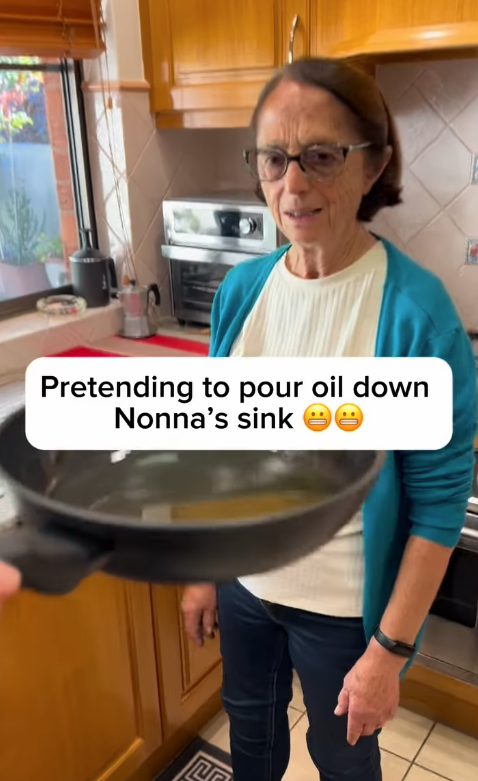
We’re still waiting for Drake to come and collect it. If you’re reading this Drizzy – reach out. I love your Nonna partner content - how did that series come about? What have you learned from it? It was through a team brainstorm about what creators we could potentially use to reach and appeal to new audiences. One of team members said she loved Nonna’s content – and the rest of us soon did too. We presented a list of topics and suggestions for how they might be weaved into a typical Nonna video to her team, and they went away and scripted the series of videos. The reason the content works so well is it just feels so authentic. It’s Nonna in her natural setting, doing activities you’d expect to see in the rest of her content, remaining true to her usual tone and style. You’d barely know it’s sponsored content. And that’s the biggest takeaway for us moving forward with using content creators – find people who naturally align with your messaging and let them tell your story in a way their audience expects and loves.
|
|
One of your pinned TikToks - about what materials break down in water - has 2.7 million views. Does that show that there is still that appetite for quite straightforward educational content? What made it perform so well?
We certainly prioritise “edutainment”, but I think it [straightforward educational content] can still work effectively if it has a relatable hook, presents the information in an easily digestible format, and uses interesting visuals throughout.
I think there’s two keys to the success of this video: It presents an issue that’s relatable. We all flush things down the toilet every day, and we’ve all probably flushed a tissue or cotton bud without knowing we shouldn’t. It shows, rather than tells. What’s more effective: us telling you that wet wipes and tissues don’t break down in water, or clearly demonstrating it using a visually interesting piece of equipment that you probably won’t see on any other channel?
You’re really comfortable (and effective) playing with trends - how do you choose which ones to jump on and which to steer clear of? I think timing is key. You want to be early enough that your audience hasn’t already seen half a dozen different takes on the trend in their feed. Obviously nothing kills a trend quicker than every brand and organisation doing it to death – and we’ve probably been guilty of this in instances too. If you are late to the party, then you want to be confident that the post offers a unique angle that aligns with your voice and message. And if you’re going for humour, it’d want to be funny. When choosing what to jump on, we weigh up what trends relate to our business and whether it will resonate will our audience. I often ask myself, if I saw another brand post this, would I like or share it? That’s usually the gauge. You did jump on the Coldplay/CEO trend, which I know others avoided. What did that conversation look like, and did it achieve what you wanted it to? When I saw the original incident starting to make news, I hadn’t seen any organisations in my feeds use it yet. So I thought there was an opportunity there. I drafted the post, sent it to the team and got unanimous laughing in response. That’s usually all the encouragement I need. I feel like that type of “savage humour” and being quick to jump on pop culture events is part of the brand I’ve tried to cultivate on our social channels, and I think that sentiment is reflected in the comments. As one commenter says: “Sydney Water’s meme game is best in class”.
|
|
|
|
To find out the #1 way to save water on Valentine’s Day - check out the post here, and add to its 17,440+likes… |
|
|
|
Are you or the team using AI for anything? Or looking to? We use AI from time to time to generate images, summarise commenter sentiment on posts, or help sprout fresh ideas for content. Also Blue Silk GPT as part of our social listening tool to analyse conversations around key topics. I’d say our use of AI is very rudimentary, but something we definitely want to look into using more effectively. What do you think might change over the next year or so in the social media space? What’s going to stay the same? I saw a stat that this year in Australia, social media has overtaken traditional news sources as the main source where people get their news for the first time. For us, that means we’re starting to shift some of our resources away from traditional advertising and focusing on bespoke social campaigns. As free-to-air TV viewership continues to decline, I think you’ll see more big brands shifting the bulk of their marketing spend into social media and creator-led campaigns. Over the past couple of years we’ve seen that raw, unfiltered content reigns supreme. People want to connect with relatable and authentic brands and organisations. I don’t see that changing. For government and public service agencies, its time to leave the generic social tiles and corporate videos behind if you want to compete and connect with your audience. Finally, what are you most proud of in your work? I certainly get the biggest thrill when my content transcends the platform – whether that’s media outlets contacting our media team to write an article about something I’ve posted, pages with large audiences reposting or repurposing my work, or waking up to find a Sydney Water post being discussed on morning television. One of the pinch-me moments a few years ago saw rugby league legends Andrew Johns and Brad Fittler laughing about one of my tweets on the Wide World of Sports. But more simply I take great pride when I’m stopped by colleagues, friends, or even people in the gym and asked – “was that post you? I loved it”.
|
Quick 6 with Trent Hile… 1. Strategy or tactics?
I’d say both. To put it in rugby league parlance: strategy is the fundamental gameplan – tactics are the individual set plays and trick shots that can help you win the game.
2. Favourite platform? Instagram.
3. Least favourite platform?
Tiktok - produces some great content, but a lot of it I look at and just ask – why on earth have 2 million people watched this? I guess I’m old.
4. One public sector account to follow?
Queensland Health – their memes and cultural references are A+.
5. One non-public sector account to follow?
The Betoota Advocate – their satirical news takes on what’s happening in the world are always hilarious and on-point.
6. Something you wish you’d known earlier in your career?
The importance of taking time away from the platforms. You can fall into a trap of riding every post watching for engagement – it’s not good for your mental health. Also not to get bogged down in chasing the next viral post. Consistency and authenticity are what will set you up for long-term success.
|
|
That’s it for today. If you get value from this newsletter and would like to support me, please consider forwarding it to colleagues who may find it interesting. And I’ll see you again in two(ish) weeks. Bye 👋
|

|
If you want an instant gauge of how strategically you're using social media, see if you can answer this one critical question. |
|
|
|
Like what you’re reading but aren’t yet subscribed? Don’t miss out on monthly content and social media tips delivered direct to your inbox.
|
|
|
|