|
How Predator Free NZ uses social media to make people care ͏ ͏ ͏ ͏ ͏ ͏ ͏ ͏ ͏ ͏ ͏ ͏ ͏ ͏ ͏ ͏ ͏ ͏ ͏ ͏ ͏ ͏ ͏ ͏ ͏ ͏ ͏ ͏ ͏ ͏ ͏ ͏ ͏ ͏ ͏ ͏ ͏ ͏ ͏ ͏ ͏ ͏ ͏ ͏ ͏ ͏ ͏ ͏ ͏ ͏ ͏ ͏ ͏ ͏ ͏ ͏ ͏ ͏ ͏ ͏ ͏ ͏ ͏ ͏ ͏ ͏ ͏ ͏ ͏ ͏ ͏ ͏ ͏ ͏ ͏ ͏ ͏ ͏ ͏ ͏ ͏ ͏ ͏ ͏ ͏ ͏ ͏ ͏ ͏ ͏ ͏ ͏ ͏ ͏ ͏ ͏ ͏ ͏ ͏ ͏ ͏ ͏ ͏ ͏ ͏ ͏ ͏ ͏ ͏ ͏ ͏ ͏ ͏ ͏ ͏ ͏ ͏ ͏ ͏ ͏ ͏ ͏ ͏ ͏ ͏ ͏ ͏ ͏ ͏ ͏ ͏ ͏ ͏ ͏ ͏ ͏ ͏ ͏ ͏ ͏ ͏ ͏ ͏ ͏ ͏ ͏ ͏ ͏ ͏ ͏ ͏ ͏ ͏ ͏ ͏ ͏ ͏ ͏ ͏ ͏ ͏ ͏ ͏ ͏ ͏ ͏ ͏ ͏ ͏ ͏ ͏ ͏ ͏ ͏ ͏ ͏ ͏ ͏ ͏ ͏ ͏ ͏ ͏ ͏ ͏ ͏ ͏ ͏ ͏ ͏ ͏ ͏ ͏ ͏ ͏ ͏ ͏ ͏ ͏ ͏ ͏ ͏ ͏ ͏ ͏ ͏ ͏ ͏ ͏ ͏ ͏ ͏ ͏ ͏ ͏ ͏ ͏ ͏ ͏ ͏ ͏ ͏ ͏ ͏ ͏ ͏ ͏ ͏ ͏ ͏ ͏ ͏ ͏ ͏ ͏ ͏ ͏ ͏ ͏ ͏ ͏ ͏ ͏ ͏ ͏ ͏ ͏ ͏ ͏ ͏ ͏ ͏ ͏ ͏ ͏
|
Gidday there, Jeepers this year has been … quite a lot! Like a constant drip on the temple. Or a nagging dull throb. Or - for some people - like being under siege. War, cost of living crisis, AI, public sector cuts, elections, petrol prices, more AI, restructures, tech overlords, racist politicians, Donald Trump, Ed Sheeran. Non-stop bollocks from start to finish 😅 Which is why I reckon we need - more than ever - the hope, joy, and incredible beauty provided by nature. So praise be that today we’re talking birds and other wonders of nature, with the incredible people behind Predator Free NZ’s channels. It gives me hope - hope it gives you some, too. —— Before we do, though, the bit that helps me pay the mortgage (and keep making these newsletters). I now have three training programmes now - each tackling a different problem I see in comms teams. Social Media for the Public Sector is for people doing the work. Last course for the year kicks off on 16 October so get in quick. Skip Slop & Slap is the new workshop Hayden Maskell and I have built for comms teams wanting to be more deliberate with AI - and have more fun being creative. And Leading Social Media is my private programme for people leading social media teams who want to better understand the work, support their people, and make better decisions. Now, on with the show… Cheers 👋
Seamus Boyer
|
|
“Creators are constantly in a mode of experimentation, and that’s what allows them to move so quickly with what works right now online.”
|
|
Three pieces of the internet that got my attention recently:
|
|
The people at Predator Free are the best people. I’ve been extremely lucky to have been invited to hang with them a few times over the years, talking social media and being bolder, but also just shooting the breeze over a beer. They are fun, funny, positive, and lovely to be around. Their social media is also world class - a really awesome mix of entertainment, internet culture, and education. For today’s interview, I talked with Andrew James, social media and digital content manager for the Predator Free NZ Trust. Lots of good stuff here - enjoy! 💚💚💚
|
|
Firstly, Andrew, tell us a little about your role at Predator Free?
My role is called “social media and digital content manager”, but we’re a small team, so the tasks are super varied. I run social media and our newsletter, write for our website, illustrate comics, and whatever else needs doing. I’m part of a comms team of three - Allison is an ex-journalist and Faye’s a graphic designer, but in practical terms we all do everything. Social media is a team sport - I think every piece of content that leaves the building has everyone’s fingerprints on it. My background is a little offbeat for a social media role (high school maths teacher -> meteorologist -> working in comms team at MetService -> social media manager), but it’s always been about communicating science.
What are you trying to achieve through social media?
The aim of the Trust is to make the predator free movement mainstream - what if backyard trapping was as normal as recycling? We all put out our bins every week, and anyone who doesn’t recycle would be regarded as a weirdo these days.
Social media plays a part in this goal, mostly in the early stages. Maybe today you see a funny kākā video; next week you’re following us. After a couple of months of seeing regular wildlife videos and content showing the impact of introduced predators, you feel motivated to do something, so you use our website to buy a trap or find a trapping group near you.
That’s the kind of user journey we’re hoping for.
|
|
|
|
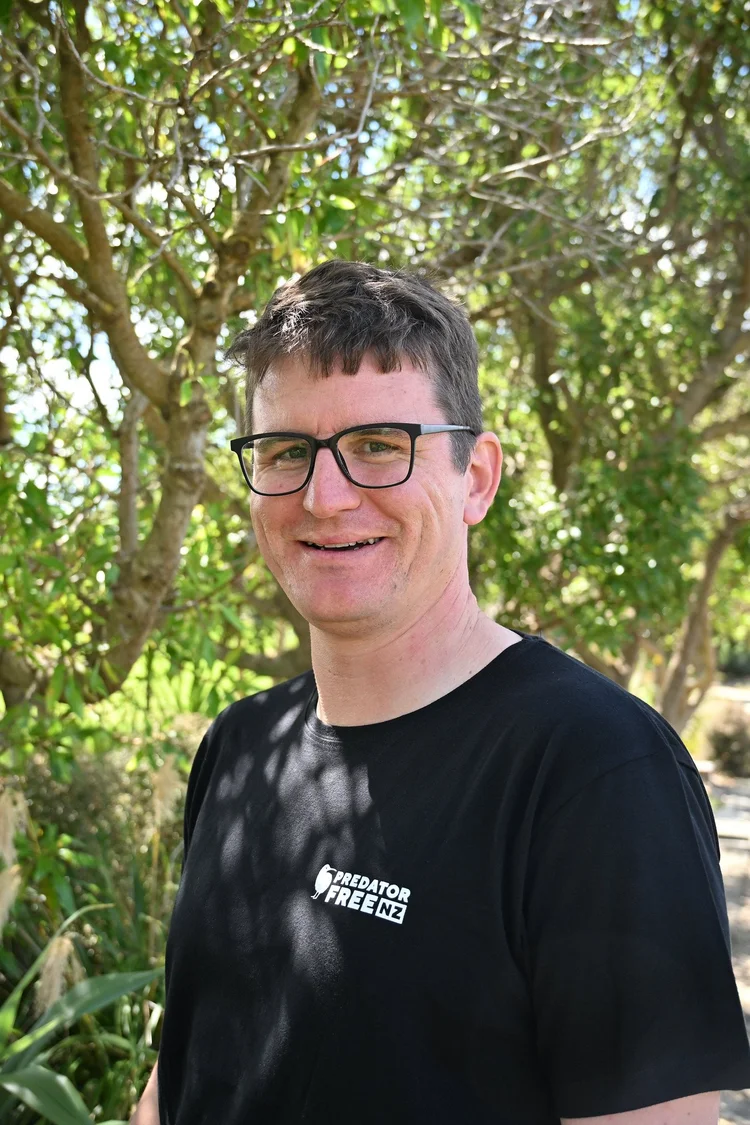
Andrew James, social media and digital content manager for the Predator Free NZ Trust. |
|
|
|
Who are you most trying to reach - and what would you like them to do?
Our audience is “all New Zealanders”, which is so broad that it’s difficult, so we don’t try to reach everyone all the time. From time to time, we turn our focus to specific groups for a focused period, and that works well for us (trampers, mountain bikers and gardeners have been a few of them). In terms of what we want them to do, we’d love it if everyone put a trap in their backyard, but we know not everyone will. So, mostly it’s just seeing and sharing our content, and subconsciously connecting the health of our native species to predator control.
Occasionally we have a bigger ask, like asking people to make a written submission about adding feral cats to the Predator Free 2050 target species list, but we only do that very occasionally, and most of it is driven by super-involved newsletter subscribers rather than social media audience.
Ultimately we want Predator Free 2050 to be part of the national consciousness, a thing that everyday Kiwi are proud of, not just something that hard-out conservationists think about. We’re trying to reach the point where Predator Free 2050 is as important to our national identity as the All Blacks; make protecting our native wildlife so vital that abandoning it would be unthinkable.
There's that overused quote from David Attenborough too: “No one will protect what they don't care about; and no one will care about what they have never experienced.” We're trying to help people experience NZ's native wildlife and see how important it is to save it.
|
|
|
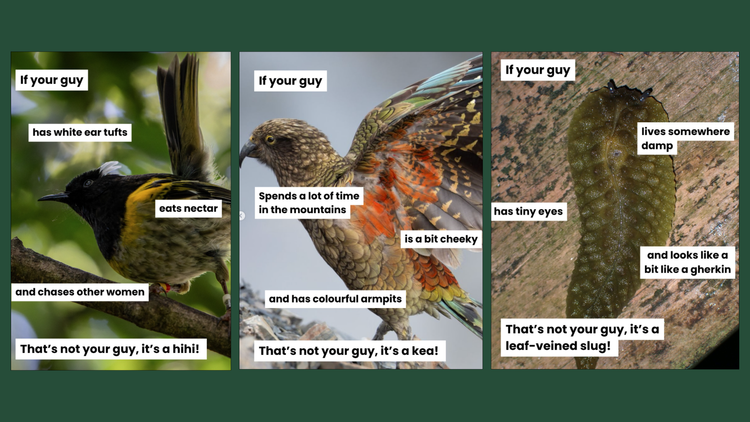
The care and skill that goes into balancing entertainment, internet culture, and education is amazing. Learning about nature never felt so fun. |
|
|
How has your approach changed over time?
It’s always changing. We never get married to a format or an idea. We like to repeat what works and try new things if it doesn’t. When something flops, we like to try and dangle a second, more tempting cherry in the feed soon after. How do you approach brand on your social media? How much freedom do you have to adapt it for the platforms?
Our visual brand is set in stone; we use the same fonts, colours and visual style across all our content on social media, website and print. This has two big benefits. Everything looks like it came from us, and it makes creating content easier and faster. Our voice is different from platform to platform - we’re more likely to crack a joke in the comments on Instagram and be a bit more earnest on LinkedIn, but the things that are universal are pretty simple: we’re helpful, we’re scientifically accurate, and we talk in plain language.
You’ve consciously moved away from portraying introduced predators as “bad”. What prompted that, and what does it mean for how you communicate?
Predator control isn’t about predator control. The whole point is to help our native species thrive. It’s much easier for people to connect with that than with images and talk of dead things.
This idea was established before I started at the Trust. Mostly, it means not showing photos of dispatched predators, not vilifying them (it’s not their fault humans brought them here), and focusing on outcomes instead: bird counts, not catch counts.
|
|
What else is unique to science social media that people might not appreciate?
That you can’t do hard science all the time and expect to reach a wide audience. People are scrolling looking for entertainment; they’re not on social media to read the latest research. We talk about “serving vegetables and treats” a lot, and I think it’s a pretty good analogy. In this metaphor, dry facts and information are the vegetables, and fun bird memes or reels are the treats.
If I served boiled Brussels sprouts night after night, I don’t think my kids would eat them. And if I just fed them chocolate, they might be happy but won’t get much out of it. Sometimes it pays to dip the Brussels sprouts in chocolate and cover them with sprinkles - i.e. a bird meme that helps you learn something new but is totally entertaining. How do you decide what kinds of stories and content to share? Do you work to set content pillars?
Everything we do at the Trust comes under three pillars: inspire, enable and advocate. Most of what we do in digital comms falls under the first two (stories of progress, funny bird memes, and new tools and technology inspire; how-to-trap articles and videos about identifying rat species enable people to take action). We try to keep a balance between these kinds of content, and if something doesn’t inspire or enable action, it doesn’t have a place in our feed.
We have a brainstorming session about once a month for new stories and ideas, but if something timely or trending comes up, we turn things around pretty quickly.
|
|
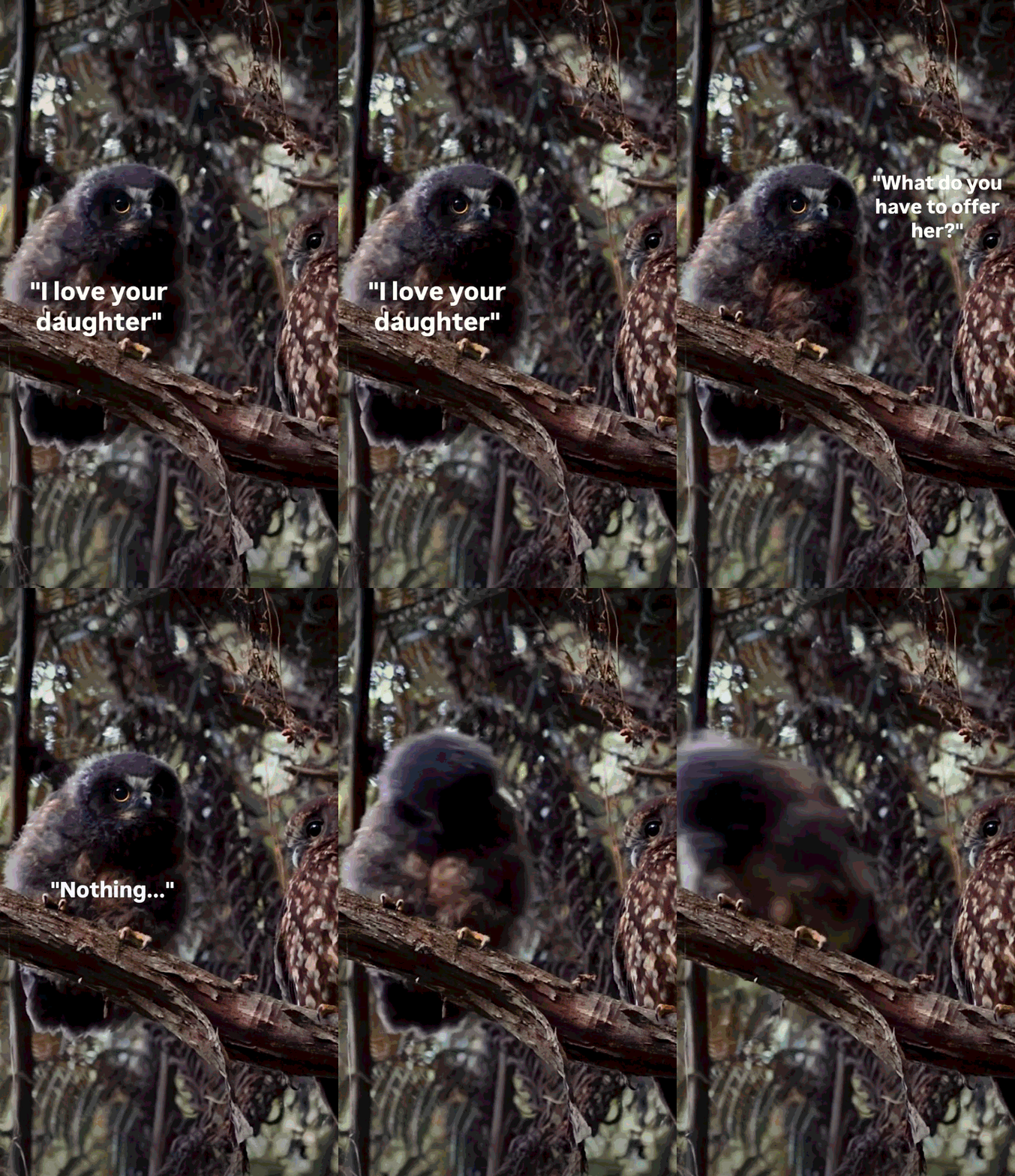
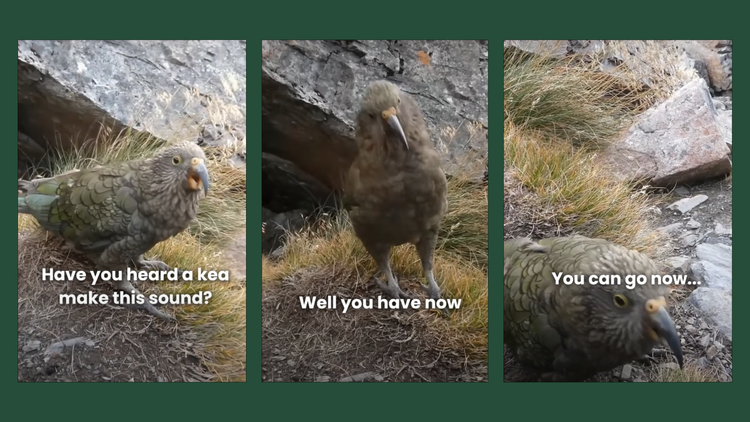
One distinctive strand is endearing us to our native species - showing their weirdness, uniqueness and personality, usually with plenty of whimsy. How deliberate is that approach?
Absolutely deliberate. We’re always looking for that strange hook that can lead into something else. Often we’ll work out the hook before we work out what the message is going to be.
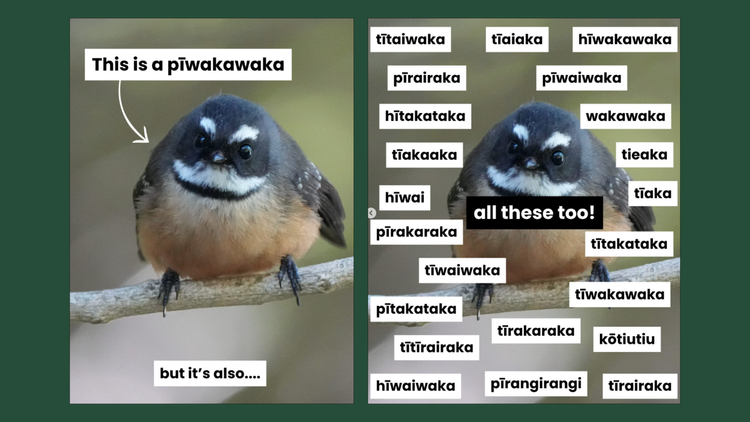
Quirky facts make a good gateway to caring about our cool wildlife. If you can get a laugh or a double take that can stop the scroll, it’s easier to get people to care.
Social’s a tough game, and you’re up against some pretty incredible content; “did you know” isn’t gonna cut it. How do you judge when to tap into trends? And how effective are they for your content?
Trends are great; when they work, they can really take off, and when they don’t (for whatever reason), it doesn’t really matter, as no one sees them. I think the test is: 1. Do we understand why this is funny or entertaining? If none of our team fully understand the trend, there’s no way we’re going to make something that works.
2. Could this in any way be crass, rude or offensive to any group? If yes, then don’t do it.
3. Is it still timely? If a trend is old, you can easily look out of touch.
4. Can we connect this to predator control and still be funny or shareable? It doesn’t have to be funny - we had 180k views of this very earnest “What were you like in the 90s” video after I found some old film photos.
|
|
Give us a sense of scale: what kind of audience and engagement numbers are your channels doing?
Our total social audience is over 100K across platforms.
On social, we’ve had a handful of 1m+ video views and plenty in the 100s of thousands. In terms of static posts, some have likes in the 10s of thousands. We aim for a high engagement rate: for a post to be a success in our eyes, we want it to be over 10%.
Our email newsletter (25K) is by far our most engaged audience. They’re deeper in the journey and more likely to click and read full articles, or buy traps or gear from our shop. Finally, how do you know when your social media is working? We track our reach and engagement monthly, and it’s pretty simple: numbers go up good, numbers go down bad. We try to work out what’s working and what isn’t, and use that to inform our approach. We can’t control those things directly; the best thing we can do is keep up a steady cadence of high-quality content. But I think we all know that social on its own is just a means to an end; the real measure is whether our overall strategy and actions at the Trust change the perceptions and behaviours of everyday New Zealanders. So, every two years, we commission an independent survey into New Zealanders’ awareness and understanding of Predator Free 2050. That number has gone up every time, and while there’s no way to prove it, I like to think that kererū reels, and comics about possum butts have played a part.
|
Quick 6 with Andrew James…
1. Strategy or tactics?
Tactics.
2. Favourite platform?
Instagram.
3. Least favourite platform?
TikTok.
4. One public sector account to follow?
A bit niche, but Civil Defence Taupō always makes road snowfall warnings funny and readable on Facebook.
5. One non-public sector account to follow?
@braxtonhaugen is a master storyteller. I'll always watch his videos all the way to the end.
6. Something you wish you’d known earlier in your career?
You never know where you'll end up, so take whatever opportunities come along.
|
|
So good, right? Got a page or team behind it that you’d like to hear more about? I’m currently scouting for more interview ideas, so hit reply and let me know who is doing good stuff and I’ll see what I can do :) That’s all for now. Have a great week, and I’ll see you again soon for more tips on how to get just a little bit Better 👋
|

|
Want to make life unnecessarily difficult for your social team? Here are 7 sure-fire ways to do it. |
|
|
|
Like what you’re reading but aren’t yet subscribed? Don’t miss out on monthly content and social media tips delivered direct to your inbox.
|
|
|
|