|
Haydyn Jones on leadership, measurement, and proving social media’s real-world value. ͏ ͏ ͏ ͏ ͏ ͏ ͏ ͏ ͏ ͏ ͏ ͏ ͏ ͏ ͏ ͏ ͏ ͏ ͏ ͏ ͏ ͏ ͏ ͏ ͏ ͏ ͏ ͏ ͏ ͏ ͏ ͏ ͏ ͏ ͏ ͏ ͏ ͏ ͏ ͏ ͏ ͏ ͏ ͏ ͏ ͏ ͏ ͏ ͏ ͏ ͏ ͏ ͏ ͏ ͏ ͏ ͏ ͏ ͏ ͏ ͏ ͏ ͏ ͏ ͏ ͏ ͏ ͏ ͏ ͏ ͏ ͏ ͏ ͏ ͏ ͏ ͏ ͏ ͏ ͏ ͏ ͏ ͏ ͏ ͏ ͏ ͏ ͏ ͏ ͏ ͏ ͏ ͏ ͏ ͏ ͏ ͏ ͏ ͏ ͏ ͏ ͏ ͏ ͏ ͏ ͏ ͏ ͏ ͏ ͏ ͏ ͏ ͏ ͏ ͏ ͏ ͏ ͏ ͏ ͏ ͏ ͏ ͏ ͏ ͏ ͏ ͏ ͏ ͏ ͏ ͏ ͏ ͏ ͏ ͏ ͏ ͏ ͏ ͏ ͏ ͏ ͏ ͏ ͏ ͏ ͏ ͏ ͏ ͏ ͏ ͏ ͏ ͏ ͏ ͏ ͏ ͏ ͏ ͏ ͏ ͏ ͏ ͏ ͏ ͏ ͏ ͏ ͏ ͏ ͏ ͏ ͏ ͏ ͏ ͏ ͏ ͏ ͏ ͏ ͏ ͏ ͏ ͏ ͏ ͏ ͏ ͏ ͏ ͏ ͏ ͏ ͏ ͏ ͏ ͏ ͏ ͏ ͏ ͏ ͏ ͏ ͏ ͏ ͏ ͏ ͏ ͏ ͏ ͏ ͏ ͏ ͏ ͏ ͏ ͏ ͏ ͏ ͏ ͏ ͏ ͏ ͏ ͏ ͏ ͏ ͏ ͏ ͏ ͏ ͏ ͏ ͏ ͏ ͏ ͏ ͏ ͏ ͏ ͏ ͏ ͏ ͏ ͏ ͏ ͏ ͏ ͏ ͏ ͏ ͏ ͏ ͏ ͏ ͏ ͏
|
Hello, Or should I say Gidday…? Because today is all about Australia. We’ll get to the (absolute cracker of an) interview soon. But first up, I recently went deep into Australian public sector social media to answer an important question: which state or territory is doing it best? The result is my new State vs State report which you can find here: www.seamus.nz/resources/state-vs-state-public-sector-socials-edition I analysed every state and territory across seven categories - from health and police to transport and tourism - named a winner in each, pulled together loads of excellent examples, and found a few lessons for public sector comms teams everywhere. Check it out. Cheers,
Seamus Boyer 👋
|
|
“A problem well stated is a problem half solved.” - Charles Kettering
|
|
Haydyn Jones has seen government social media from three different angles: from inside agencies, at Meta, and now as Assistant Director of Social Media at Australia’s Department of Home Affairs. That experience has given him a particularly well-rounded view of the sector. He also brings real rigour to two areas that are too often overlooked (and undercooked) in government social media: leadership and measurement. Both are areas that - as a whole - public sector social media still has plenty of room to grow, and both come through strongly in our conversation. I learned a lot, and I think you will too. Enjoy. 👇👇👇
|
|
Firstly, Haydyn, where do you work, and what do you do? I’m currently an Assistant Director at the Department of Home Affairs within the Media and Social Media team. I manage social media within the department, which includes Home Affairs, Australian Border Force, and the National Cyber Security Coordinator channels.
My role is more or less split up into two parts; proactive social media strategy and management, as well as reactive situational awareness and social listening (the joys of a portfolio which is constantly in the news). What does a senior social media role in government actually involve? I'm responsible for leading the product and the craft at a strategic level: setting the objectives for us as a team, setting the framework and strategy, and engaging with more senior stakeholders so the team can carry that out at a tactical, campaign-led level. My priority is supporting our small (but very mighty) team in their day to day and delivering on the strategy, but some days I'm moderating comments and some days I'm creating posts as well. It’s still pretty hands on.
|
|
|
|
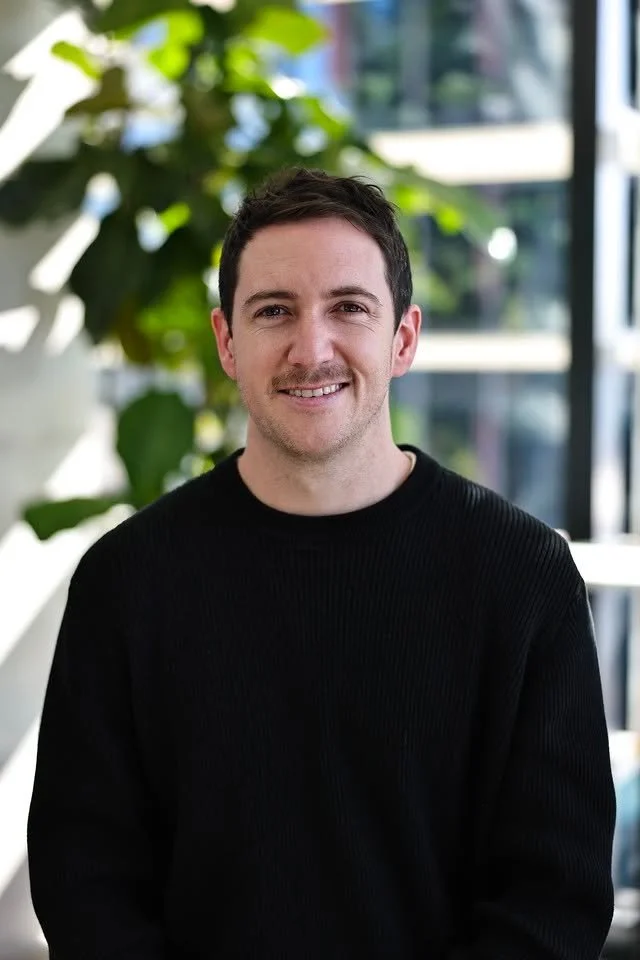
Haydyn Jones is an Assistant Director at the Department of Home Affairs. |
|
|
|
You've worked in agencies, at Meta, and now inside government. How has that shaped your approach? I started in advertising and digital marketing agencies, working across finance, banks, education, alcohol, confectionary – a really broad mix of industries and subject matter. Towards the end of my agency career, we won the Federal Government account so I came on to lead the paid social offering
It was very different from the consumer brands I'd worked with. With private brands, it was: what's next? How do we do better? How do we prove our effectiveness? How can we push things? Government was a shock to the system, because it was: how do we minimise risk and make sure nothing goes wrong? We used to joke that success looked like no issues, rather than the best performance or the biggest test and learns.
After UM, I moved to Meta for two years. Each step has added another layer of understanding, but also empathy as well. You realise the people on the platform side really are trying to help solve your problems, but they are part of a much bigger machine. Then this role at Home Affairs came up, and it felt like the final piece of the government puzzle. I've advised government through an agency, supported government from the tech and platform side, and now worked inside government. I feel like I've got that holy trinity [laughs]. What is the biggest challenge at your role level? Navigating organisational constraints; sometimes I feel like our team is a Formula 1 car trapped in peak-hour traffic. A lot of my recent focus has been around internal education to improve this; things like department-wide social media 101 training, as well as creative workshops - a lot of people don't realise how much of a role creative plays to deliver effective social media content.
But at the end of the day a well thought-out strategy (and its tactics) don’t mean much if you are constrained in your execution. We’re a small team of three servicing three different accounts, as well as the social listening side of things, so bringing to life all our big and bright ideas can be a challenge!
|
|
What helps you change minds inside a conservative or risk-averse organisation? I'm a really big advocate for picking up the phone and informalising a lot of it. If this work is shared over email, you lose the context and some of the finer details you could better articulate face to face, over the phone, or on a Teams call.
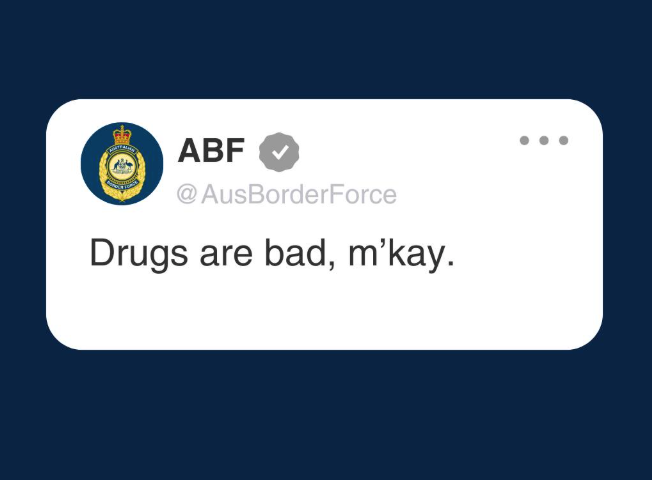
The first thing is laying the foundation of a relationship. Our team is structured with dedicated account managers, I guess you would call them. One person looks after dogs, drugs and border processes, the other looks after immigration and visas, cyber security etc. Where we've seen the most success is where we've had longer-term relationships with people. Eventually, we can send something through to them to check and they say, ‘Sweet, go for it’.
In newer situations, where we haven't established that relationship or it's new territory for the business area, we rely on face-to-face time and consultation. We tend to explain our rationale more often and point to external case studies and brands that have borne the risk and done it. The more forward-leaning organisations and departments here and overseas give us work we can point to and say, ‘We're not crazy, we're not just young and dumb and chasing trends. There is a method to the madness’.
How do you create room for proactive ideas when requests keep flooding in?
We're getting really good at saying no - not just a flat-out no but, ‘No, and this is why’. We're formalising and templating a lot of those responses so the approach is consistent and it's clear to different business areas why their idea about promoting a meeting with a screenshot from Teams isn't right for social. That comes back to advocacy and education. We've also updated our systems so we can identify whether an idea or campaign originated either with the social team, or with a business area. We compare the two and say, ‘See what happens when we do what we do, compared with your ideas?’ There are pretty drastic differences in performance and effectiveness. That's another data point to say, ‘give us more people’, but also ‘trust that we know our space’. For me, social media isn't about adding in puns and choosing the right emoji. It's about concepting strategic, social-first content ideas that are made for the platform and for the audience, are effective and deliver outcomes. Those ideas need to come from us.
|
|
|
A well-executed status update-style post is a thing of beauty. |
|
|
Time, resources and people are always the challenge. But we try to prioritise the ideas that deliver organisational outcomes and also reward the team professionally and creatively. Bringing something to life and seeing it work is what keeps us motivated. Phi, one of our social media officers, recently brought to the table a proactive idea for the Detector Dog Program. It was the only activity in market at the time, so we could isolate the role of social media. It led to about 80 applications from people wanting to foster pups. That was rewarding for them: they created something and saw it deliver a real-world outcome. As a manager, how do you help that creative process?
Most importantly, I think it is setting the expectation that it's okay to get things wrong. You're not going to get everything perfect, but you need the data points to understand what works and what doesn't. What works for a health agency, an education organisation or local government might not work for us. We've shifted the strategy for each of our accounts based on what works for us.
We also empower people to bring ideas to the table. Content ideation doesn’t sit with one role or person. We're always flicking each other content, ideas, brands or trends and asking, ‘Is there something there? Could that come to life for your account?’
Some of it is the behaviours and attitudes you establish; some is the formal process. We tend to plan our content a month or two in advance, alongside bigger, longer-term thinking. In those sessions, we bring everything to the table: what have you seen? What do you think works? How can we do good work?
I'd also like to say I lead by example. Typically, if you see anything sport-related on our accounts, that's me. Personally, I find it professionally rewarding to bring those ideas to life when they ladder up to a broader strategic objective. Are we still winging it a little in terms of how we measure success? Measurement is probably the hardest thing in digital marketing and communications, and the area in which our industry has the most room to mature. My background was in paid social media, where "engagement" can be a dirty word. There is a lot of independent research into the lack of correlation between proxy metrics, such as likes, and actual brand outcomes: making people aware of your organisation, shifting sentiment, creating message association or actually driving an action. In paid social, that correlation between engagement and real brand outcomes isn't necessarily there.
|
|
I hate hearing, ‘We got this many likes on a post’, because it's a very elementary way of thinking and probably does more damage to us as an industry, even when we think we're advocating for ourselves by saying, ‘Look how well we did’. I've made a lot of effort to strip our focus back to the objective for each piece of content. You can have two pieces of content with wildly different objectives, so their measures and KPIs should be wildly different too. We bake that into how we develop content, ideas and campaigns. That said, measurement is still really hard. You have the walled ecosystems of platforms such as Meta, then website analytics and CRM systems etc. So where we can, we work with our internal teams like Analytics to ask, ‘We posted this content and delivered strong media metrics; how did that translate? What did you see?’ We ask for their results and map those against our own activity to put the pieces together. How do you track the different jobs your content is trying to do? Last year I led a project to remap how we categorise all our content when we publish it. We use Sprinklr, and we introduced fields that identify the intended outcome of each piece of content or campaign. Is it awareness building, mid-funnel consideration or conversion? We map and tag our content accordingly. It's not a perfect science, but it lets you see that awareness content might not deliver as much site traffic or as many lower-level engagements - and that is okay, because that isn't what we're trying to achieve. What does good government social media look like to you? For the most part, it doesn't look like any other government department or agency. In an age of brands hijacking cultural moments and trends - which we definitely jump on where relevant - your authentic brand voice and identity need to shine through. Otherwise, we risk creating a homogenous government social media kind of landscape. For example, how we communicate for the Australian Border Force is very different from the Department of Home Affairs. Highlighting a massive ketamine seizure or encouraging someone to foster a detector dog is naturally going to be very different from talking to people about complex and sensitive subjects such as immigration, visas and asylum seekers. Consistency is also key. It can be hard to resist the dopamine rush of a potentially high-performing post or a viral cultural moment, but we pause and ask, ‘Should we, as a brand, be tapping into this? Do we have the authority to talk about this?’ And fundamentally, good social media delivers a value exchange to your audience, whilst delivering on one of your organisation’s objectives. It has to be both.
|
|
Is humour still underused by government? Absolutely. Social media is a victim of the environment in which risk gets associated with something being silly or funny. But we know why people go to these platforms, and we know how we share content within our own circles. Why wouldn't that be relevant for a brand or organisation trying to deliver real-world outcomes? I often literally hold up a phone and say, ‘This is your competition’. It's dogs and content creators. You're not operating in a vacuum with other government agencies. As with everything though, there is a time and a place. Finally, what has changed in government social media over the past three years? For starters, the collective work of the public-sector social media industry is moving everyone forward. All those small battles people fight every day are doing good for the wider sector. Sometimes we've taken a proactive idea to a business area and they have said, ‘Actually, I saw another agency do something like that’. Collectively, those successes help other organisations move along and reduce that perception of risk. What hasn't changed are many of the problems we face. Going to a public-sector communications conference a couple of years ago was reassuring because I realised I wasn't crazy and wasn't the only person facing these issues. I'm not saying any of us had the silver bullet or all the answers, but it was comforting. Collectively, I think we're also getting a little braver. Not just in doing viral or socially led content, but in advocating for what we believe is strategically sound and right. For example, many agencies are deprioritising X, not only because of performance and effectiveness, but because of the direction they feel the platform is heading. We're becoming mature and vocal enough to say, ‘Yes, there are people there we can reach there, but what is the risk and reward of being present on a platform that may not enforce rules around things such as hate speech?’. That’s a good thing.
|
Quick 6 with Haydyn Jones… 1. Strategy or tactics?
I’ll say strategy because I’m reviewing ours currently, but there’s nothing better than a tactic that delivers on strategy.
2. Favourite platform? At work, Facebook. Yes I’m an aging millennial but it consistently delivers for us. At home, Instagram.
3. Least favourite platform?
X.
4. One public sector account to follow?
Singapore Police Force.
5. One non-public sector account to follow?
Wimbledon’s official Instagram for their ‘Overheard at Wimbledon’ series. A really smart and engaging way to bring the courtside experience to everyone.
6. Something you wish you’d known earlier in your career?
Invest in relationships with your work colleagues.
|
|
That’s it for today. Seen anything you think a friend or colleague (or, ya know, boss) would find helpful or interesting? Forward this on to them. Sharing these newsletters is a great way to support me. Have a cool day 👋
|

|
Which state does Australia’s best public sector social media? I went deep to find out. |
|
|
|
Like what you’re reading but aren’t yet subscribed? Don’t miss out on monthly content and social media tips delivered direct to your inbox.
|
|
|
|