|
Survey insights from the sector, and a practical chat about accessibility in comms. ͏ ͏ ͏ ͏ ͏ ͏ ͏ ͏ ͏ ͏ ͏ ͏ ͏ ͏ ͏ ͏ ͏ ͏ ͏ ͏ ͏ ͏ ͏ ͏ ͏ ͏ ͏ ͏ ͏ ͏ ͏ ͏ ͏ ͏ ͏ ͏ ͏ ͏ ͏ ͏ ͏ ͏ ͏ ͏ ͏ ͏ ͏ ͏ ͏ ͏ ͏ ͏ ͏ ͏ ͏ ͏ ͏ ͏ ͏ ͏ ͏ ͏ ͏ ͏ ͏ ͏ ͏ ͏ ͏ ͏ ͏ ͏ ͏ ͏ ͏ ͏ ͏ ͏ ͏ ͏ ͏ ͏ ͏ ͏ ͏ ͏ ͏ ͏ ͏ ͏ ͏ ͏ ͏ ͏ ͏ ͏ ͏ ͏ ͏ ͏ ͏ ͏ ͏ ͏ ͏ ͏ ͏ ͏ ͏ ͏ ͏ ͏ ͏ ͏ ͏ ͏ ͏ ͏ ͏ ͏ ͏ ͏ ͏ ͏ ͏ ͏ ͏ ͏ ͏ ͏ ͏ ͏ ͏ ͏ ͏ ͏ ͏ ͏ ͏ ͏ ͏ ͏ ͏ ͏ ͏ ͏ ͏ ͏ ͏ ͏ ͏ ͏ ͏ ͏ ͏ ͏ ͏ ͏ ͏ ͏ ͏ ͏ ͏ ͏ ͏ ͏ ͏ ͏ ͏ ͏ ͏ ͏ ͏ ͏ ͏ ͏ ͏ ͏ ͏ ͏ ͏ ͏ ͏ ͏ ͏ ͏ ͏ ͏ ͏ ͏ ͏ ͏ ͏ ͏ ͏ ͏ ͏ ͏ ͏ ͏ ͏ ͏ ͏ ͏ ͏ ͏ ͏ ͏ ͏ ͏ ͏ ͏ ͏ ͏ ͏ ͏ ͏ ͏ ͏ ͏ ͏ ͏ ͏ ͏ ͏ ͏ ͏ ͏ ͏ ͏ ͏ ͏ ͏ ͏ ͏ ͏ ͏ ͏ ͏ ͏ ͏ ͏ ͏ ͏ ͏ ͏ ͏ ͏ ͏ ͏ ͏ ͏ ͏ ͏ ͏
|
Kia ora, In the last edition, I asked for your help with a short, anonymous survey about how 2025 felt - and what you’re hoping for in 2026. A pretty consistent picture emerged. People talked about being stretched thin, and doing too much. There was a strong desire to do less overall, get better at saying no, and create more space for planning. But there was also hope, some examples of great ways of working, and a lovely reminder that “most of the time, it's not that serious”. I’ve pulled the responses together in a new piece - 2026 vibe check: “everyone feels as cooked as me” - if you want a deeper read. (There’s also a link after the interview if you’d rather keep going here first.) Overall, it gives a good snapshot of where the sector is at right now - and what people are quietly hoping might change next year. Which nicely echoes today’s interview, where Callum McMenamin breaks down the everyday accessibility gaps we’re still missing - and how that might change with advances in AI. Cheers,
Seamus Boyer 👋
|
|
“Developing a clear, informed understanding of what the goal is and why - and never losing sight of it from beginning to end - is the foundation of a successful project.” - Bent Flyvbjerg
|
|
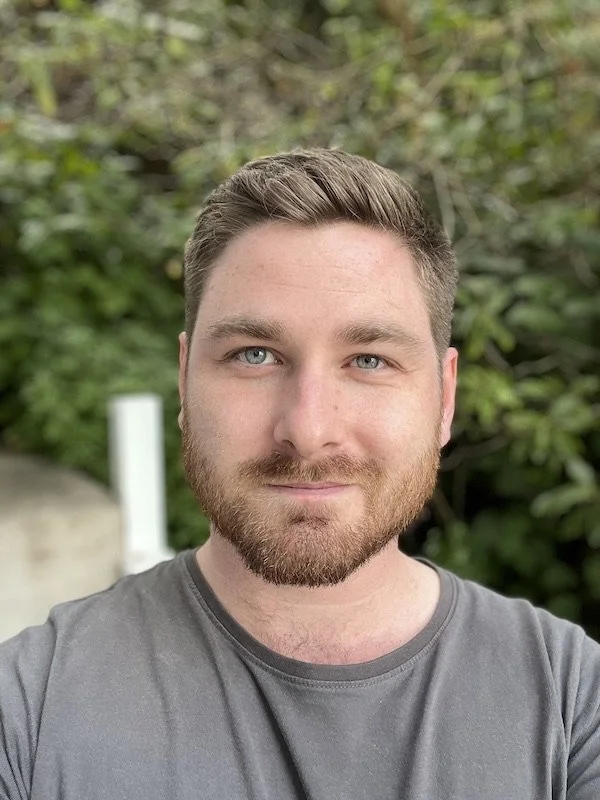
Today I’m chatting with Callum McMenamin, a digital accessibility consultant, and newly appointed member of the Whaikaha Ministry of Disabled People’s Accessibility Advisory Group. I first noticed Callum on LinkedIn, where he has some pretty direct opinions on accessibility and where organisations can do better. He’s good at shining a light into places that need some illuminating. He’s also excellent at explaining - clearly and compellingly - what good accessible content looks like, and why it’s crucial to modern communications (as well as good for everyone). Heaps of good stuff in this conversation, I really hope you enjoy it. 👇👇👇
|
|
Kia ora, Callum, firstly where do you work, and what do you do? I run a consultancy called OpenAccess. I help organisations to make their websites and apps more accessible for disabled people. In the past, I primarily worked for various public service agencies, basically doing the same. There’s a lot of talk about how harmful social media is. But for many disabled people, it can also mean greater access and participation. Is that a fair way to look at it? Yep, absolutely. I recently read some research into the experiences of people with intellectual disabilities. They found that many people in that group are socially isolated, basically because society is ableist and has ingrained negative beliefs about disabled people. That isolation is a direct result of societal attitudes, not individual choice. This research looked at social media use in that community and found that it enabled people to connect with others and engage with their communities in better ways. There are also other barriers - some people can’t leave their house, some don’t have access to accessible transport. Social media helps bridge those accessibility gaps. So yes - social media has a bunch of creepy billionaires running the whole thing - but it does have real benefits. Where do you think we’re at in 2025 for accessibility, in terms of where we’ve come from and where we should be? Two main issues come to mind. The first is alternative text descriptions on images. Alt text describes an image using text. If you’re blind and use a screen reader, the device reads that description out loud. Most public-sector agencies still do not add alt text to their images. They often embed essential information into the images themselves. That’s especially harmful in emergency situations - civil defence, weather events - although NEMA is actually pretty good. Some agencies publish urgent information that blind people simply cannot access. It’s also a problem on Facebook. If you don’t manually add alt text, Facebook makes it up using what I call “artificial unintelligence”, and you end up with bizarre descriptions going out to the public. The second issue is video. Many agencies still aren’t captioning their videos, which frustrates me. When I go on TikTok, 95% of videos are captioned by amateur creators. Meanwhile, professional government departments - who have legal requirements - struggle with it. Creators caption everything because if they don’t, their content doesn’t perform well, people don’t watch it. Gen Z also overwhelmingly prefers captions. Captioning increases comprehension for everyone. People on buses with no headphones, people watching quietly, people who process information better visually - so captions also help people who aren’t deaf or hard of hearing.
|
|
|
|
Callum McMenamin was recently appointed to the Whaikaha Ministry of Disabled People’s Accessibility Advisory Group. |
|
|
|
There’s also a lesser-known requirement: full text transcripts for all government videos. And a transcript isn’t just a copy of the captions - it includes a description of the visual content. That’s for people who are deafblind. They can't hear the video, and they can't see the video. So they will use what is called a refreshable Braille display. It's this really cool device that you plug into your computer, and it's got like 12 or 20 Braille cells, and it's got little metal pins. It can go up and down using magnets, and you can just read anything on a computer in Braille. Some blind people also prefer Braille to audio because it’s quieter and helps with comprehension. A major issue is that the web accessibility standard does not apply to social media, because it technically applies only to government websites. That gap needs to be fixed. The web accessibility standard should apply to all government content, regardless of where it’s published. In terms of transcripts, how do you apply that on social media? Do you link to them somewhere? Yes. Most agencies just have a webpage where they dump all their transcripts and link back to it. If you’re reasonably tech savvy, AI can help a lot - captioning is nearly fully automated now, you just touch it up after. If you’re clever with video production, you can also write the transcript first. It becomes the script and the storyboard for the video. It costs nothing extra and actually makes things easier. There’s also audio description. That’s extra narration describing the visual content. For example, imagine a government video explaining how to vote. If text appears on screen saying ‘Visit vote.nz’, but no one reads it, blind viewers have no idea it’s there. Dyslexic viewers might see the text but not be able to read it before it disappears. So narration is essential. I read recently that 40–50% of New Zealanders use captions while watching TV. So this isn’t niche - it’s mainstream. Yep, pretty much everyone. And if you don’t use captions now, just wait until you get older. That’s the thing about accessibility: you don’t even need to care about other people to value it. You can be selfish. And if you don’t need accessibility right now, you will later. We're all one random medical condition - or one trip - away from being disabled in different ways. There’s also the curb-cut effect. Most innovative tech starts as assistive tech and then becomes mainstream. Curb cuts were created because wheelchair users couldn’t navigate big drops at intersections. Disabled students fought for curb cuts across a US campus. Suddenly scooter riders, skateboarders, cyclists and people with prams loved them. Now they’re everywhere. Same with text messaging (invented for deaf communication), Siri and Alexa (text-to-speech and speech recognition), and countless other tools rooted in disability tech. People don’t realise how much assistive tech is built into daily life.
|
|
I think some of our limitations in social media accessibility come from not understanding what it’s like to use these tools differently. Can you describe what it’s like using a screen reader?
It’s an interesting experience. The main reason things aren’t accessible is ignorance. People aren’t evil or actively trying to exclude disabled people - they just don’t know. And public-service accessibility teams are really under-resourced as well. When I demo screen readers, people have a revelation. They realise a post isn’t being looked at - it’s being listened to. That changes everything. HTML is designed to be presentation-agnostic. It doesn’t assume vision or sound or touch. Web browsers and assistive technologies interpret it differently depending on the user: speech for blind users, Braille for deafblind users, visuals for sighted users. The way I think about it is: HTML structures information so it can travel from the “metal computer” to the “meat computer” - the human brain. So it's just networking, right? Computer networking, and one of the computers is just slightly more squishy than the other. It's related to the four core principles of accessibility. The first and third principles are the most relevant to social media. The first one is perceivable, and that means that people must be able to perceive the information in some way. If you can't perceive the information, if the data can't go from the metal computer to the meat computer, you can't access it. So if you've got images that have no alt text, you cannot perceive the images. And the third principle is understandable. Once that data has been transmitted to your brain, you need to be able to process it and understand what it means. And that's where things like plain language become really important. How does it feel for disabled people engaging with content that isn't created for them? Is it a sense of being left out or forgotten? Sometimes it’s forgotten. Other times it feels “conveniently forgotten”. A core disability advocacy phrase is ‘nothing about us without us’. Yet disabled people are routinely locked out of policy development - even policy about disabled people. Both left and right governments do this. Progressive spaces forget disability too, because people in power are usually non-disabled. Look at Parliament - few disabled MPs, and some likely hide it because it’s perceived as political weakness or would be used to attack them in some way. One frustration in NZ government and local government is the lack of centralised guidance. Councils and agencies having to individually figure out accessibility, social media standards, AI - everything. It’s overwhelming for small teams. There have been attempts. DIA publishes a web accessibility guide - I helped write parts of it - but it’s dense and difficult to understand. It’s very dry. MSD published guidance, but it’s locked in PDFs on an outdated website. Their site feels like a time machine. It’s ironic: the agencies responsible for accessibility have some of the least accessible websites.
|
|
What does a realistic minimum standard for accessibility look like in practice for comms teams? Basic minimum training for comms professionals. It's all well and good to set standards for the outcome, but you're not going to get there unless people have the knowledge to implement those standards effectively. Comms managers should track new staff and have a checklist: alt text, captions, audio description, plain language, where to put transcripts. Provide proper professional development. Check it occasionally. There’s this buzz phrase: “Accessibility is not a checklist.” And I say, ‘What do you mean? Of course it's a checklist’. You literally have to check that captions exist. You have to check for alt text etc. What does that accessibility workflow look like inside a comms or social team? Ideally it’d start with all content creators being properly trained on accessible content. The thought of publishing a video without captions shouldn’t even cross anyone’s mind. The idea of posting an image without alt text should seem alien. So, in a sense, the best workflow is to simply have content creators who don’t make non-accessible content to begin with. It’s so much easier to just do it right the first time, rather than mopping up mistakes. If a team isn’t quite there, checklists can help catch errors. Ensure there’s a basic set of checks before anything is published, and make those checks mandatory. How do you balance speed and getting info out there with accessibility requirements? I know organisations can struggle to get content translated into Easy Read or sign language formats? Accessible web content shouldn’t add too much overhead versus non-accessible web content. Sure, writing out alt text descriptions takes time, but it’s fairly quick once you get the hang of it. If agency websites are designed to be accessible, i.e. font sizes increase easily, good colour contrast etc, then the job of creating accessible content is made much easier for those who upload new content. Many agencies are let down here - they have terrible websites. As for the translation of content into alternate formats like Easy Read, NZSL, audio, braille, and large print, it’s true that the translation process for this can be slow. The usefulness of audio, braille, and large print formats are debatable, given modern technology can easily convert web pages into those formats automatically. I’d say agencies should generally use Easy Read and NZSL translation for really mission-critical stuff that doesn’t change frequently. It’s never going to be feasible to translate most content into alternate formats, so prioritisation is key. AI will hopefully solve this over time.
|
|
Finally, what changes do you expect (or hope for) by the end of 2026? Well, the most obvious one is AI will progress further, becoming an even more essential accessibility tool for many disabled people. Current AI technologies, like being able to get audible descriptions of the world around you using your phone’s camera, are incredibly useful for people who are blind. These sorts of use cases will become more prevalent, and more useful than ever.
The responsibility for making the world accessible will start to shift slightly, as AI technology increasingly bridges the gap between disabled people and the non-accessible world around them. Additionally, as more digital systems and content becomes AI-generated, it gives us the opportunity to ensure those systems are trained in accessibility - instead of having to train hundreds and thousands of humans on accessible content, perhaps we only have to train a handful of AI models, making the problem easier to solve.
|
Quick 6 with Callum McMenamin… 1. Strategy or tactics?
Or … standards! I am more of a fan of defining minimum requirements, then ensuring that they are met continuously.
2. Favourite platform? TikTok for sure. I don’t want to read or think, just zonk out and consume content as my brain slowly liquefies. A lot of it is audio-based so is accessible for people with vision impairment like me.
3. Least favourite platform?
Probably Facebook. It’s not very interesting.
4. One public sector account to follow?
Why not follow Whaikaha Ministry of Disabled People on LinkedIn?
5. One non-public sector account to follow?
I like The Spinoff, particularly their podcast network. I think in an environment where traditional media is generally dying, it’s important to support independent producers of news and analysis. I especially like The Spinoff’s political content, like the Gone By Lunchtime podcast, and Juggernaut.
6. Something you wish you’d known earlier in your career? Don’t bother trying to fit in, if the environment feels like it’s not including or respecting you. The problem isn’t you, it’s the people and processes around you. Look for your niche, and the places where you’ll be included, valued, and respected - that’s where you’ll do your best work. There’s no point in p*ssing into the wind - especially in Wellington.
|
|
That’s it for today’s edition - hope you enjoyed it. If you have any feedback, please hit reply on this email and send it my way. I love hearing from you. The plan is to sneak one more newsletter in before Christmas, but we’ll see. After all, ‘tis the season of deferring ‘til next year. Have a great day, and see you soon 👋
|
|
A survey of Better readers on what they learned in 2025 … and what they expect and hope for in 2026. |
|
|
|
Like what you’re reading but aren’t yet subscribed? Don’t miss out on monthly content and social media tips delivered direct to your inbox.
|
|
|
|