|
How Whakatāne’s joyful council TikToks built trust, reach, and buy-in. ͏ ͏ ͏ ͏ ͏ ͏ ͏ ͏ ͏ ͏ ͏ ͏ ͏ ͏ ͏ ͏ ͏ ͏ ͏ ͏ ͏ ͏ ͏ ͏ ͏ ͏ ͏ ͏ ͏ ͏ ͏ ͏ ͏ ͏ ͏ ͏ ͏ ͏ ͏ ͏ ͏ ͏ ͏ ͏ ͏ ͏ ͏ ͏ ͏ ͏ ͏ ͏ ͏ ͏ ͏ ͏ ͏ ͏ ͏ ͏ ͏ ͏ ͏ ͏ ͏ ͏ ͏ ͏ ͏ ͏ ͏ ͏ ͏ ͏ ͏ ͏ ͏ ͏ ͏ ͏ ͏ ͏ ͏ ͏ ͏ ͏ ͏ ͏ ͏ ͏ ͏ ͏ ͏ ͏ ͏ ͏ ͏ ͏ ͏ ͏ ͏ ͏ ͏ ͏ ͏ ͏ ͏ ͏ ͏ ͏ ͏ ͏ ͏ ͏ ͏ ͏ ͏ ͏ ͏ ͏ ͏ ͏ ͏ ͏ ͏ ͏ ͏ ͏ ͏ ͏ ͏ ͏ ͏ ͏ ͏ ͏ ͏ ͏ ͏ ͏ ͏ ͏ ͏ ͏ ͏ ͏ ͏ ͏ ͏ ͏ ͏ ͏ ͏ ͏ ͏ ͏ ͏ ͏ ͏ ͏ ͏ ͏ ͏ ͏ ͏ ͏ ͏ ͏ ͏ ͏ ͏ ͏ ͏ ͏ ͏ ͏ ͏ ͏ ͏ ͏ ͏ ͏ ͏ ͏ ͏ ͏ ͏ ͏ ͏ ͏ ͏ ͏ ͏ ͏ ͏ ͏ ͏ ͏ ͏ ͏ ͏ ͏ ͏ ͏ ͏ ͏ ͏ ͏ ͏ ͏ ͏ ͏ ͏ ͏ ͏ ͏ ͏ ͏ ͏ ͏ ͏ ͏ ͏ ͏ ͏ ͏ ͏ ͏ ͏ ͏ ͏ ͏ ͏ ͏ ͏ ͏ ͏ ͏ ͏ ͏ ͏ ͏ ͏ ͏ ͏ ͏ ͏ ͏ ͏ ͏ ͏ ͏ ͏ ͏ ͏
|
Kia ora legend, Who would have guessed it - apparently people don’t like crap content made by robots 😄 Are you seeing the same headlines pop up across your socials recently? Basically, people hate robot content and smart companies are investing heavily in human-made, human-centred stories about humans that human human human etc. A telling piece of info is that LLM company Anthropic has 80 people in its comms team. I mean, WTF? As AI matures, and we mature in our use of it, it is becoming increasingly clear that its strengths are in things like analysis, process, aggregation, and speed. And not in unique insight, humour, creativity, empathy, play, and the textured and highly nuanced understanding of culture that good communication requires. This may change over the next wee while (who the hell knows what will happen), and maybe ChatGPT might gain the ability to become even remotely funny. But for now, I think we’ll do best to stay clear-eyed about what we hand over to AI, and what we double down on instead - i.e. the human parts of the work that are our superpowers as communicators and social pros. Cheers,
Seamus Boyer 👋 P.S. Before we start, a quick thank you for reading this newsletter. It feels pretty cool to reach 50 editions! If you ever feel like it, forwarding this email to colleagues or sharing any insights from it on LinkedIn are the best ways to support me. Thanks so much.
|
|
“I urge you to find a way to immerse yourself fully in the life that you’ve been given. To stop running from whatever you’re trying to escape, and instead to stop, and turn, and face whatever it is. Then I dare you to walk toward it. In this way, the world may reveal itself to you as something magical and awe-inspiring that does not require escape. Instead, the world may become something worth paying attention to.” - Dr Anna Lembke in Dopamine Nation
|
|
Today I’m chatting with Talia Brogden, a Communications Advisor at Whakatāne District Council. Like many New Zealanders, I was forwarded some of the council’s TikToks during the election last year. They featured staff dancing, doing skits, and generally bringing a bit of joy to people on the internet (so needed RN eh). In this interview, we dig into how those videos came together. How Talia worked with staff to get them comfortable on camera, what made the content work, and her practical tips for getting colleagues involved. I hope you enjoy it. 👇👇👇
|
|
Firstly, Talia, where do you work, and what do you do? I’m a Communications Advisor at Whakatāne District Council, where I support a range of teams with strategic and day-to-day communications, engagement and media relations. I’m also leading our social media refresh and strategy. I started my career in broadcasting as a journalist and producer at TVNZ before moving into print and digital media. In all my roles I’ve found myself helping organisations grow and strengthen their social media presence. I’ve never had any formal training in social media, but I’ve learnt along the way, and being chronically online helps.
You’ve had some amazing success using staff in social media videos - describe your approach for us.
We really struck gold during the elections campaign when we decided to lean into TikTok trends, take a few creative risks and put our staff front and centre. One of our most popular videos was the ‘bin drop’ inspired by the Beyoncé Partition trend - where we got three men to drop on the voting bins. It was silly and unserious, but still carried a clear message about voting. Our approach was about showing the human side of Council by getting staff on camera, and doing the unexpected, without compromising messaging. People don’t anticipate humour or trend-based content from their local council, so when you deliver something that feels current and funny - while still purposeful - it cuts through.
|
|
|
|
Talia has wonderful advice: “Approach people with kindness and curiosity”. Too bloody right! |
|
|
|
Where did the idea for the first video come from? The original ‘bin drop’ idea actually came from someone outside the comms team. Eliot - the guy in the pink shirt - works in strategy and happens to be a really good dancer. Eliot came to me and said, “Have you seen this trend that NZ Cheap Cars did?” They’d done it first, and he suggested we do something similar. The comms team took that idea and played around with how it might work for us, using the orange election bins. None of the people in the video were from the comms team, which I thought was really cool. It set a precedent that anyone in council could be involved. Relationships matter a lot. I already worked closely with Eliot, so he felt comfortable suggesting it. The two other guys were also people I worked with, which made it much easier to ask them to be in the video, rather than just going up to randoms at work [laughs]. What was the response like across platforms? We posted on TikTok, Facebook, Instagram, and LinkedIn, and the response was about 99% positive across all platforms. The TikTok was the best received. I did have to delete a few comments on Facebook, and I had expected Facebook to be more controversial, but most people loved it there too. LinkedIn also did really well, which surprised me. I wasn’t sure whether to post it there, but I’m glad I did because it showed that this kind of content can work on LinkedIn too.
The stats were huge for a little place like Whakatāne (population 38,000). The original bin drop video got 148.7k views on TikTok, 177k on Meta, and 12k impressions on LinkedIn, and during the election period our total views were up 100% on the previous period. Most importantly, voter turnout ended up at 49.2% - up from 45.3% in 2022. And what kind of feedback did you get? Externally, we received comments from people saying things like, “I’ve never been interested in my council or voting, but this makes me want to vote”. Some weren’t even in our district but said they were going to vote, so that was really cool. And internally as well it was received really, really well. The boys in the video got so much attention and were talking about it for months. At our end-of-year awards, the chief executive even referenced that approach to elections and said councils would likely use similar humour in future. So that was really cool to feel that support from senior leadership.
|
|
What surprised you most?
I was really surprised by how many people internally wanted to be involved once they saw it was safe and supported. People I never expected - like someone from accounts - asked to be in videos. You genuinely don’t know who’s keen until you create the space. We made it clear participation was optional and boundaries would be respected. We also shared our social content internally so staff could see what we were doing. Had you launched your TikTok specifically for the elections? We didn’t start TikTok specifically for the elections. I’d just started the role, and there wasn’t anyone else with TikTok experience, so basically started the role and then got the TikTok running. Once it was running, we realised elections content could work well there. How did you manage staff safety and risk? When asking staff to be in videos, I really had to make it clear that their safety was a priority. Some of what they were doing in the videos felt kind of risky in terms of potential public reaction, so I told them I would be committed to monitoring comments after hours and removing anything negative so they knew they were protected. Even when the local newspaper picked up the story and made a comment calling them “old men” when Eliot is only 29, I went back to the reporter and addressed it directly. That reinforced to staff that we had their backs. If people were going to put themselves out there and be part of our videos, we were going to protect them and make sure any nasty comments would be removed.
|
|
|
|
Pink Shirt Guy™️could probably run for mayor in Whakatāne at this point… |
|
|
|
Did you moderate differently to usual? Yes, I paid much closer attention than usual. We always assess whether a post might be spicy and moderate accordingly, but this was different. I spent the whole weekend checking comments in real time. I wanted to set a precedent that it was safe and fun so that other people would be keen to join in as well. What approval process did you go through? I showed the videos to my manager and the general manager and they loved it. Because we’d never posted anything like this before, I made sure it was signed off properly. I think we were all super lucky because I know not all councils would be open to it, but our leadership was very supportive. Do you think it’s easier to advocate for this kind of content as part of a specific campaign, as opposed to BAU? Totally. With the election campaign we got momentum and could keep running with it. With day-to-day stuff, I don’t want it to look like we aren’t doing work - instead doing trends and “wasting ratepayer money doing these dances”. We are trying now to identify other opportunities where we can go big like that again, but without flogging a dead horse or the public being over it and not finding it funny. Did the experience change how you approach comms? Absolutely. I think much more creatively now. I did experiment with some niche, trend-heavy content like Wellington City Council and Invercargill City Council but our analytics quickly showed that our district responds much better to broad, obvious humour. I was probably over-complicating things before. The success of that video showed me that being simply funny and human can be far more effective than being clever or niche for our target audience.
|
|
What are your main lessons for getting staff to participate in social videos? I think the biggest thing is relationship. My success in getting staff involved really came from having strong relationships with people before I ever asked them to be in a video. I already knew their names, their personalities, and I’d often chit chat with them in the staff room. The second lesson is prioritising online safety. I always assured staff that their safety was our priority. When we were showing their faces and they were representing council publicly, I committed to doing extra monitoring of the comments and deleting anything abusive or inappropriate. It’s also about understanding each person’s boundaries. What one person is comfortable with, another might not be. So having those conversations before you hit record is really important. Another big one is encouraging staff ideas. People are much more likely to get involved when they feel like they can collaborate or have some input. Not everyone cares about that, but for a lot of people it creates shared ownership. They have more fun, and they feel less like a puppet. Momentum plays a huge role. Once other staff saw their friends and colleagues getting involved - and saw that they were being cared for in a fun and safe way - they were really keen to join in. During the election campaign, almost every day I had more people coming up to me saying, “Did you know so-and-so would actually be keen to be in a TikTok?” These were people I never would’ve expected. You genuinely don’t know until you ask. And I do have to say culture matters too. The culture at Whakatāne District Council really helped. I know I’m lucky that we have an executive team who were willing to push the boundaries on socials and trusted my vision. And my colleague Haylee King, who ran the elections campaign, did a phenomenal job as well - like taking voting on a roadshow. We had so many people coming up to us making jokes about dropping on the bins. It really became a shared thing.
|
|
|
|
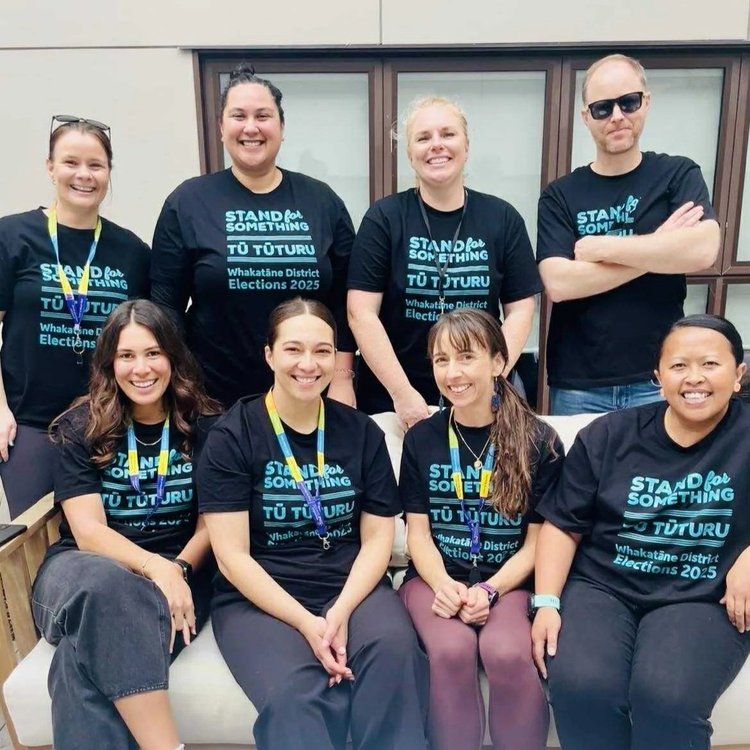
The WDC comms team on election day |
|
|
|
What would you say to other councils or orgainsations who feel nervous about putting staff on camera or letting them be a bit playful? Showing faces and seeing real council workers was at the core of what made it successful - and what continues to make it successful. It’s not as scary as it seems, but it does come with responsibility. You have to care for the people who are willing to show their face, share their work, and be a bit silly. Ultimately it humanises council and council work. And I think that can soften perceptions, especially when you later have to communicate more controversial things or bad news. And honestly, people just can’t get enough of Pink Shirt Guy.
|
Quick 6 with Talia Brogden… 1. Strategy or tactics?
Strategy with a bit of wiggle room to go with the flow. Social media is always changing so your strategy should be able to accommodate that.
2. Favourite platform? TikTok - you can rely on the algorithm to do its thing, and it’s full of hilarious, creative people. I love how it lets you experiment, take risks, and the comment section is always a good time.
3. Least favourite platform?
LinkedIn sorry not sorry.
4. One public sector account to follow?
I love Palmerston North City Council – I thought their elections content was also amazing and they also do a great job of getting their staff front and centre.
5. One non-public sector account to follow?
Saint Hoax - they do social commentary on pop culture and current events using memes in a way that’s hilarious, while always striking the right balance with tone.
6. Something you wish you’d known earlier in your career?
The importance of relationships! Be friendly and kind to your colleagues. Technical skills can be learnt but building trust in a workplace is the foundation for success. When I started working as a grad, I was intimidated by colleagues with far more experience than me, but I’ve learned to lean into it and see it as an opportunity. Approach people with kindness and curiosity.
|
|
That’s it for today. If you have any questions or feedback, please hit reply on this email and send it my way. I love hearing from you. If not, have a great day, and see you soon 👋
|

|
New Zealand Parliament’s exit from X became political theatre. It didn’t need to. |
|
|
|
Like what you’re reading but aren’t yet subscribed? Don’t miss out on monthly content and social media tips delivered direct to your inbox.
|
|
|
|