|
What councils know about connection that most accounts forget. ͏ ͏ ͏ ͏ ͏ ͏ ͏ ͏ ͏ ͏ ͏ ͏ ͏ ͏ ͏ ͏ ͏ ͏ ͏ ͏ ͏ ͏ ͏ ͏ ͏ ͏ ͏ ͏ ͏ ͏ ͏ ͏ ͏ ͏ ͏ ͏ ͏ ͏ ͏ ͏ ͏ ͏ ͏ ͏ ͏ ͏ ͏ ͏ ͏ ͏ ͏ ͏ ͏ ͏ ͏ ͏ ͏ ͏ ͏ ͏ ͏ ͏ ͏ ͏ ͏ ͏ ͏ ͏ ͏ ͏ ͏ ͏ ͏ ͏ ͏ ͏ ͏ ͏ ͏ ͏ ͏ ͏ ͏ ͏ ͏ ͏ ͏ ͏ ͏ ͏ ͏ ͏ ͏ ͏ ͏ ͏ ͏ ͏ ͏ ͏ ͏ ͏ ͏ ͏ ͏ ͏ ͏ ͏ ͏ ͏ ͏ ͏ ͏ ͏ ͏ ͏ ͏ ͏ ͏ ͏ ͏ ͏ ͏ ͏ ͏ ͏ ͏ ͏ ͏ ͏ ͏ ͏ ͏ ͏ ͏ ͏ ͏ ͏ ͏ ͏ ͏ ͏ ͏ ͏ ͏ ͏ ͏ ͏ ͏ ͏ ͏ ͏ ͏ ͏ ͏ ͏ ͏ ͏ ͏ ͏ ͏ ͏ ͏ ͏ ͏ ͏ ͏ ͏ ͏ ͏ ͏ ͏ ͏ ͏ ͏ ͏ ͏ ͏ ͏ ͏ ͏ ͏ ͏ ͏ ͏ ͏ ͏ ͏ ͏ ͏ ͏ ͏ ͏ ͏ ͏ ͏ ͏ ͏ ͏ ͏ ͏ ͏ ͏ ͏ ͏ ͏ ͏ ͏ ͏ ͏ ͏ ͏ ͏ ͏ ͏ ͏ ͏ ͏ ͏ ͏ ͏ ͏ ͏ ͏ ͏ ͏ ͏ ͏ ͏ ͏ ͏ ͏ ͏ ͏ ͏ ͏ ͏ ͏ ͏ ͏ ͏ ͏ ͏ ͏ ͏ ͏ ͏ ͏ ͏ ͏ ͏ ͏ ͏ ͏ ͏
|
Kia ora friend, I’ve been thinking a lot lately about place - specifically, what it means in local government communications. (Yes, possibly the nerdiest opening line ever … 🤓 but bear with me.) Councils have something few other comms team do: a clearly defined patch of ground. And that geographic boundary is more than just a map - it’s a powerful advantage when it comes to relatability, connection, and community. Because we’re not just talking to residents - we’re walking the same streets, feeling the same weather, using the same parks, playgrounds, and public loos. We probably know the same barista. That shared experience? Social media gold. Not just for content, but for how we turn up in the comments and DMs. It gives us the chance to show that we understand, we relate, we get it. But like any advantage, it only matters if we’re willing to use it. In today’s interview, we get into this idea of place - and how it shapes digital storytelling - as well as what it’s like doing comms in a big city, building a team, and systematically turning off the comments. I hope you enjoy it as much as I enjoyed the chat. Cheers,
Seamus Boyer 👋
|
|
“Sometimes you got to be the enforcer … when there are people threatening your culture and your members and their safety, then you should absolutely be ruthless.” - Brian Oblinger on moderation
|
|
Today I’m chatting with Donna Elkins, Digital Content Manager at City of Sydney. We’ve spoken a couple of times since I first saw her give a really interesting talk about risk at a Canberra conference last year. What struck me then - and still does - is her calm, thoughtful approach. Donna is curious, analytical, and focused on building processes that solve big problems - all qualities I admire deeply. A lot of smart thinking follows. Read on to discover it… 👇👇👇
|
|
Firstly, Donna, where do you work, and what do you do? I work at the City of Sydney, where I am very lucky to lead an excellent team who look after the City’s digital channels including social media, outdoor screens, and websites. We share the programmes, services and initiatives from across the organisation with people who might like to hear about those things. Or, as I explained my job to my niece recently, I help my team to publish videos and pictures on the internet. I always wanted to be a magazine editor, and in my early career I managed websites for magazines. I was desperate to shift into the print team, and now I am so glad that I did not have that opportunity and instead built a career in digital content. What is your team set-up? We have a fairly flat structure, with a team of digital content specialists and one digital content coordinator. The whole team produces content across all channels. They’re either assigned work or they come up with proactive work based on capacity or interest at the time. Some of the content specialists come from a writing background, some of them come from advertising, and some are strong videographers or photographers. And they’re all moving in the direction of producing more video now, to suit the current algorithm preferences. Last year we had our coordinator join the team, which has been excellent. He’s very strong in accessibility so that’s been a game changer. Since he started, we’ve really upped our game by being consistent with things like image and video descriptions on all our social media content. I’ll talk about this more later, but it’s really important to us that our content is people-first which includes inclusive and accessible.
|
|
|
|
Donna Elkins, Digital Content Manager, City of Sydney. |
|
|
|
We're a very collaborative team. We meet every morning for a content stand up where we look at what's scheduled to go out that day, what's coming up in the week, and we also chat about content we've seen lately and liked. We have a very active group chat where we share feedback and ideas all day. We have a monthly proactive brainstorming session and once a week we meet as a team to collaborate on work in progress. We’re really focused on learning and improving what we do. When I first joined the City of Sydney, I was the content team, so I was producing content for Instagram, LinkedIn, Google Plus back then, and Facebook. I've had the team kind of grow around me. Who or what has driven that growth? What do you think made the difference at City of Sydney in getting leadership to see the value in expanding the team?
A few things. Social media has become a primary communications medium for us, rather than more of a support tool, and the visibility of results on those platforms has helped demonstrate impact. As a broader communications unit, we’ve also improved how we track and discuss work, using a workflow management tool and meeting daily as a team. This has increased transparency and made the content team’s workload more visible. When I have the opportunity to hire, I am very deliberate about broadening the skillset in our team so we can continue to evolve and that’s led to the team I have today. But ultimately, the biggest factor is having leaders who inherently understand and value the role of digital content. Their support is really what makes all the difference. Were there some key moments or wins that helped build credibility for the content function? We’re lucky to have leaders who genuinely understand the value of content and advocate for our work, so credibility hasn’t hinged on a few standout wins, but rather on consistent engagement over time. We take every opportunity to present across the organisation, at manager meetings and with other teams, to share the thinking behind what we do. My team also regularly involves employees from across the organisation in our content, which means they are constantly out there meeting people, building relationships, and producing work that supports other teams’ goals. I often receive positive feedback after shoots, and all of this contributes to building visibility and trust in the content function.
|
|
|
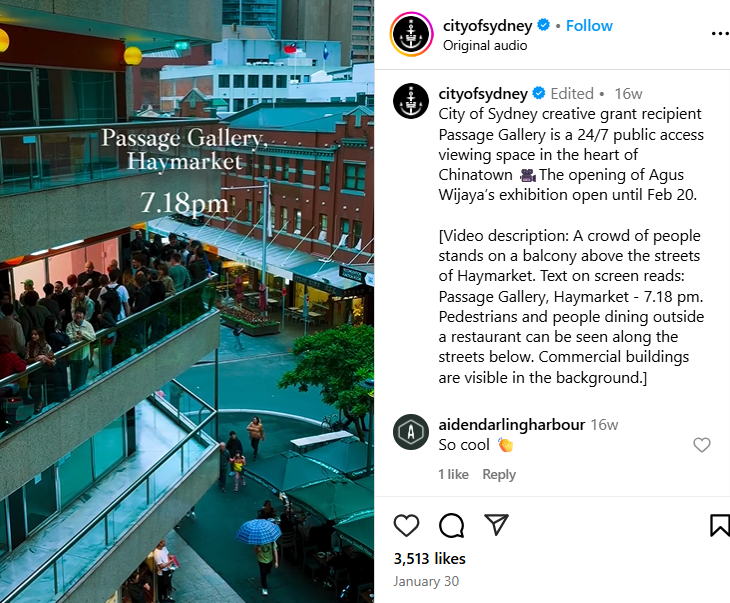
City of Sydney’s Instagram is full of fun, useful videos - the slide reviews are crack up, bro. |
|
|
What channels do you manage?
Instagram is kind of our main channel at the moment. And LinkedIn is working well for us too. We’re also on Facebook, Tiktok and YouTube. TikTok is pretty new for us. We still have Threads and Twitter (although we’re not currently as active there), so the channel mix has really grown. We also manage a network of digital outdoor screens, that we use for community and visitor information. Plus we also curate the homepage of the website.
Describe your overall approach to social media - what are you trying to achieve for the City of Sydney?
We're essentially connecting people to place. We have a pretty small geographical area that we're covering in the City of Sydney - it's just over 20 square kilometers. And people have really different connections to, and experiences with, that local area. There are people who live in the city, there are people who have previously lived in the city, there's a really big worker population, then there are visitors, and all of those people have different needs. So we have a real people-first approach, because we want whoever receives our content to feel like it's for them: that it's relevant to them, that it includes them, and that it's accessible for them. Part of that is around familiarity of place - seeing a place that you have spent time in, that street that you know well, or a space that you love. And that, we believe, drives connection to the City of Sydney local government area, which in turn builds a stronger community.
The City of Sydney is a very strategy-driven organisation, and we also have a number of different strategies that guide our approach and our future planning. The main one of those is called Sydney 2030-2050 Continuing the Vision. Essentially it guides all work that comes out of the organisation. Over the last 12-18 months we’ve been trying to make sure that our work in digital content is laddering up to that plan, and not just in terms of talking about what's in it and educating people about the work that the city is doing, but also about finding the niches where we can contribute to the directions in the plan. For example, one of the directions is about ‘a city for walking, cycling and public transport’. That's an area where, by showing that it's easy to walk or cycle or use public transport, we can have a direct impact through our content.
So the population fluctuates a lot then? Yes, we've got about 200,000 residents who need information in a certain way, plus about half a million workers and visitors who are coming in with completely different needs.
How do you approach that? In terms of coming up with content that is aimed at such a range of people? When we say our content is people-first, we mean it in a broad sense. We create content that’s relevant and accessible to as many people as possible, whether they're residents, workers, visitors, or anyone else the City of Sydney touches. We're not chasing growth for the sake of it, instead we're interested in serving the people who actually engage with or might need something from us. Our goal is to make our content useful and meaningful for the communities we serve. To do that, we draw on insights like comments and search terms to guide the topics we cover.
|
|
Councils provide a huge amount of services and can therefore communicate a lot of things - how do you triage content requests?
We work within a business partnering system, so we have comms partners who work with each part of the organisation. And we work really closely with those comms partners to help them understand our social strategy, so they do a lot of the triaging - a lot more than a few years ago when we used to have requests coming straight through to the team.
That’s music to my ears. So comms are empowered to be making some of those calls on content before they get to you? Yes, or if they're unsure then they will come and chat to us but they're doing a lot of the to-ing and fro-ing. One thing that has changed is that we need our colleagues across different parts of the organisation now more than ever in our content production. There's so much opportunity in employee-generated content, so we also wouldn't want everything triaged before it comes to us because there are lots of really good stories out there we’d like to see and tell. And we are working to shift to more proactive content development to share those stories. What else has changed in the time you’ve been in the role?
I actually think a lot has stayed the same, especially in terms of the goals, even though we hadn't articulated them so well back then. Thinking back to 10 years ago, when I was doing the content, it was a lot of UGC, so we were keeping an eye on what people had posted or sent using our hashtag and re-sharing that. And that content at its heart was about building that pride or that familiarity in the city. One of the things that has always done well for us is sharing a photo of a super moon, or a double rainbow. And it works because people are like, ‘Oh, I saw that, too. I was there. That's from where I live’. People have always responded to that. It's the same now, except that the content is infinitely more complicated – in terms of the number of formats and channels, so there’s so much more to consider and that means the skillsets required to operationalise a content strategy have changed. Take the example of a simpler piece of content like sharing a user-generated photo. If we do that now we’re asking questions like: who owns the copyright? Where did that image come from? Are we crediting that image correctly? And then you've got the option of adding music to a post, and there are so many ways now that you need to be making sure that you are correct and compliant. Are the lyrics or that song offensive? Is there some kind of associated controversy with that song? So everything now is faster and more complicated, but it's also the same at heart.
|
|
Is social harder now? In some ways, yes. The landscape can feel more negative, and when we do get negative comments, it sometimes feels more targeted and organised than it used to. In saying that, still so much potential in these platforms to build connection and community. That’s the part we stay focused on, sticking to our strategy and creating content that feels meaningful and reflects what people care about. Doing the job I do and working with my team is such a privilege. Does this change the appetite of councils like yours in terms of how far you push your content, knowing that there can be more negativity? I don't think so. My observation is that councils and government organisations who are pushing their content quite far are often met with a positive reaction. People really like that. I think what people don't like is the non-committal push. If you're saying or doing something a little bit risky or using a trend, but not really going for it in the way the internet responds to, I think that's when it doesn't feel authentic, and that's when I see things get hit with negative comments. For me, knowing when to push our content is about asking ourselves questions around: What's the subject matter we're talking about? Is it okay to do something that's a little bit left field with that subject? What channel are we on? And what's going to be the likely impact? I think as long as those things are aligned, it’s fine. And I always encourage my team to try new things knowing that it doesn't really matter a lot of the time if it doesn't land how we’d hoped, because then we've learned something, and we can try something else.
Because Sydney is such a big, famous city, do you feel a responsibility to keep the quality of your content higher or ‘flasher’ than other councils? Would lo-fi video for example feel out of place for a metro council like yours? That’s an interesting question. I think in some ways, yes, our branding is quite polished, and the way people perceive our brand is also fairly refined. That can sometimes be a limitation, especially given the more casual, lo-fi style of content that performs well on social media at the moment. That said, we’ve found that heavily branded content doesn’t tend to perform well for us on organic social, so we’re conscious of striking the right balance. For us, authenticity still looks like high-quality content, but with some room to be lighthearted and playful when it fits. If we think about TikTok, we really want to start tapping into a younger audience, and they're unlikely to resonate with something that looks so polished. So we're finding ways to be more flexible on brand there. As part of that we’ve been leading workshops and talking to young people about what they might hope or expect to see from us.
|
|
|
|
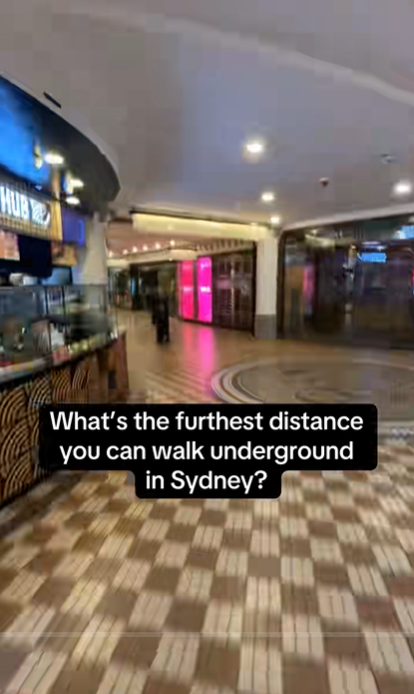
This creative TikTok is weirdly watchable - and SPOILER ALERT you can walk quite far underground in Sydney… |
|
|
|
What are you hearing from them? The main thing is that there’s often a sense of disconnection. Government organisations can feel difficult to navigate, especially if you’re not sure where to start. The groups we’ve spoken to want clearer, more accessible information about what’s available to them. And it could be as simple as, ‘here's a grant that you could apply for’, or ‘here's how you can reserve a library book and then pick it up from the library closest to you’. It’s a case of you don’t know what you don’t know. I see you consistently turn off your Facebook comments - how does that work? We turn them off after two days, which gives that post enough time to live and have those conversations unfold. And when we close comments, we always provide a forward path, so if you have more to say, or you want to make a complaint, you've got a way to do so. So we're not closing the door, but we’re protecting ourselves from having a constant moderation challenge of ever-growing threads and places where people can come in and leave comments. Closing comments gives us more focus. How would you describe your management style? I have a real focus on collaboration and on continual improvement, so I'm constantly looking for what we could do better in the team, and then facilitating how we can make that happen. Some of those are things where I've noticed we need to get better, and then I'll figure out how we're going to get there. And other things I hear from the team, and I will say, ‘Okay, so a few of you are struggling with this, how can we go and address that?’ When I’m creating any kind of change, everybody has their voice heard. I spend a lot of time running workshops and doing process change and communicating change to other teams and advocating for my team. What is your proudest achievement in that time? This might sound a bit dull, but I’ve done a lot of work on content governance and compliance, and our content is so much more compliant than it used to be. One of the biggest areas has been photography - how we procure and credit images, how we collect permission to use people’s faces, and how we store and manage photos. We got a new digital asset management system recently and I have had great support from colleagues to help implement it and run training across the organisation so people understand what their responsibilities are when using images, especially around copyright and consent. In my team, we always have work we want to do, things like sharing more regular reporting and results, more internal education and knowledge sharing, and we still want to do a podcast. So there are things to work on, but I think we’ve come a really long way and we absolutely have the energy to keep getting better.
|
Quick 6 with Donna Elkins… 1. Strategy or tactics?
It’s gotta be both. I love a strategy document, I love governance and I love organised thinking, but it’s the tactics that bring it to life.
2. Favourite platform? TikTok hands down.
3. Least favourite platform?
X.
4. One public sector account to follow?
UK Government. They’ve long been the gold standard for clear comms and I love their TikTok. It’s so considered, funny, useful, and on-brand
5. One non-public sector account to follow?
So many. Niche, but I love The Tiny Chef Show right now. Diet Prada on Instagram is a longtime favourite. And on TikTok there is so much creativity from individuals. A couple I really enjoy are https://www.tiktok.com/@benkielesinski and https://www.tiktok.com/@milkytran
6. Something you wish you’d known earlier in your career?
I used to be very driven toward a career path that no longer really exists, so I wish I’d known to trust that I was in the right place and would land where I was supposed to.
|
|
That’s it for today. I never really know what to write in this section. Or if I even need to write anything at all. But here I am writing, and there you are reading. Which is like a little moment we are sharing, which every time I think about always gives me a little buzz. Buzz. See you in two weeks or so. Chur 👋
|

|
Credibility doesn’t come from tone or language. It comes from consistency, and relevance. |
|
|
|
Like what you’re reading but aren’t yet subscribed? Don’t miss out on monthly content and social media tips delivered direct to your inbox.
|
|
|
|