
MP LinkedIn Power List 2026
LinkedIn is no longer just a digital CV site. It has become a highly influential platform in modern public life - including for politicians.
So, who is using LinkedIn well? Which MPs are shaping the conversation, building influence, and showing up genuinely and consistently - and which are barely present at all?
Produced by Blackland Public Relations and Seamus Boyer, the MP LinkedIn Power List 2026 is a snapshot of how New Zealand MPs are using LinkedIn today, and a ranking of the MPs doing it best.
What we looked at and how we assesses MPs
The MP LinkedIn Power List is based on a review of MPs with findable LinkedIn profiles. We analysed every New Zealand MP’s LinkedIn presence across 2025 and ranked them with a score out of 100.
Each MP was scored across six areas:
Profile hygiene - photos, completed career history and bios
Posting consistency - how often they show up
Content impact - reactions, comments, and shares
Influence - size of their network
Content quality - relevance, proactivity, and originality of posts
Engagement behaviour - whether they interact or simply broadcast
Content quality and conversations weighted heavily
Wherever possible, MPs were benchmarked against each other using percentiles - allowing us to compare performance across the full group.
The amount of connections and followers matters, but it isn’t everything. Consistency, originality, and a willingness to engage in the comments all contributed to the final score. This means some high-profile MPs with large followings ranked lower than lesser-known MPs running smaller but far more engaged accounts.
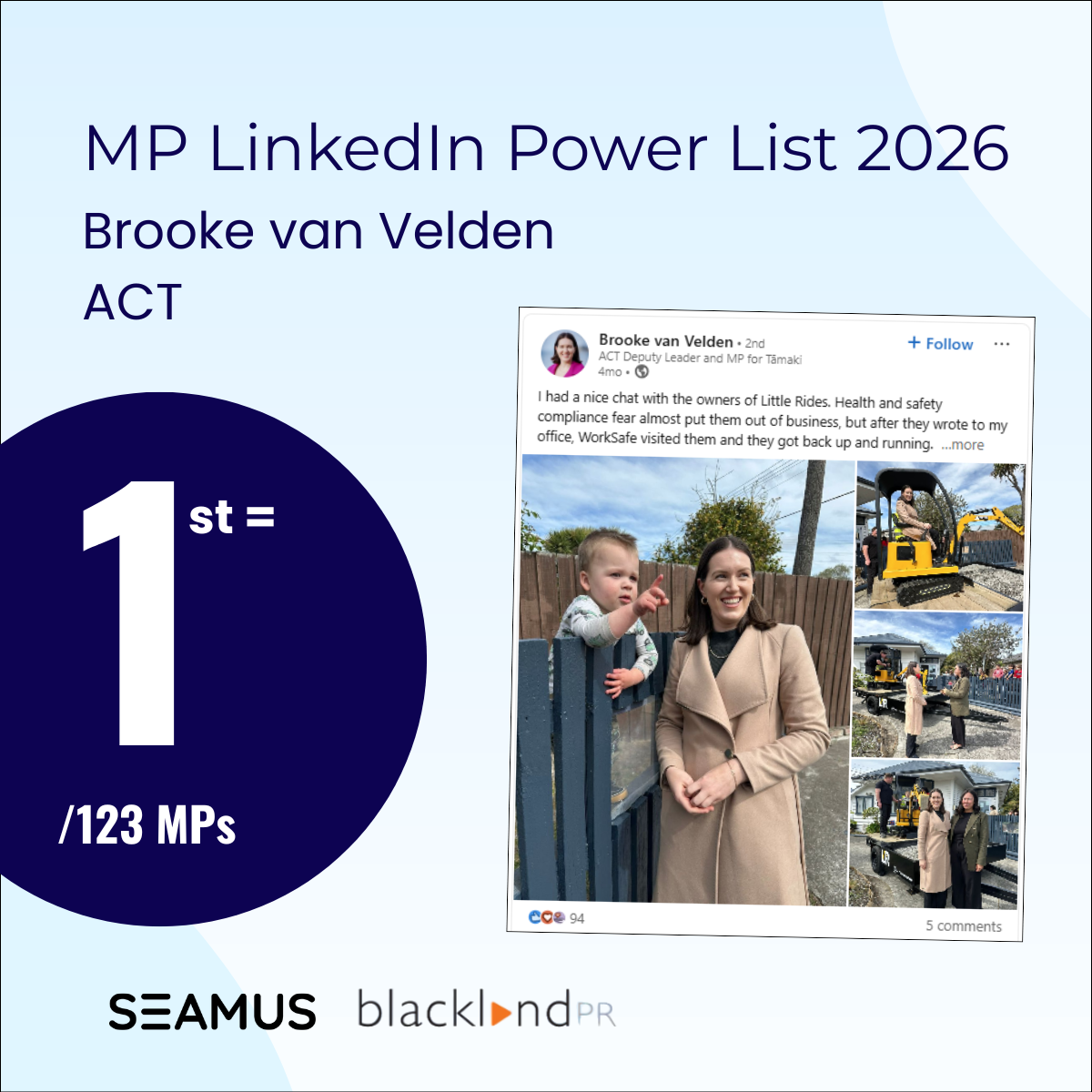
Brooke van Velden
A real LinkedIn allrounder. Brings a strong mix of hi- and lo-fi content that consistently generates excellent engagement, and she’s willing to get into the comments as well.
Why LinkedIn?
LinkedIn now has more than 1.3 billion members globally, including an estimated 3.3 million in New Zealand. Activity is rising fast too: comments grew 24% in 2025, and video uploads have seen sustained double-digit growth.
Once known mainly for job ads and corporate humble-brag posts, LinkedIn has evolved rapidly into something much closer to a mainstream social platform: a place where leaders, citizens (and voters) choose to spend time engaging with news, ideas, life updates and, yes, politicians and politics.
Content from MPs and political commentators is now regularly shared across feeds, helping ideas, policies, and debates travel well beyond Parliament. And unlike some other platforms, conversations on LinkedIn are often calmer and more professional.
Crucially, LinkedIn is where high-value audiences spend a lot of time: business leaders, public sector decision-makers, industry stakeholders, and journalists are all present and scrolling.
The tone has shifted too. Less jargon, more personality, more authenticity. It’s a space where leaders can speak (and be rewarded for speaking) in a way that feels human rather than rehearsed.
Important conversations are happening on LinkedIn, and for our MPs, you either show up as part of that conversation - or you get left out.
Individuals dominate
Just as importantly, LinkedIn overwhelmingly favours people over institutions. Personal accounts consistently outperform corporate or party pages, and the platform’s algorithm is designed to amplify individuals who show up, share consistently, and engage.
That means political impact on LinkedIn is much less likely to come from party branding - it comes from MPs themselves building visibility, credibility, and influence through their own voices.
Underpinning all of this is LinkedIn’s push towards becoming a creator-led platform. New features - including a vertical video feed - are driving more short-form, behind-the-scenes, personality-led content designed for connection, rather than just announcements.
Taken together, these changes make LinkedIn an increasingly valuable addition to the political channel mix: still professional, still high-trust, and still relatively underused.
What MPs can gain
Used well, LinkedIn allows politicians to reach citizens and voters who may not be active - or willing to engage - on platforms like Facebook or X where debate is often combative and unpleasant.
On LinkedIn there is real opportunity to:
communicate achievements and priorities directly
build relationships with sector and industry stakeholders
position themselves as credible voices on policy and leadership
engage audiences in a less polarised environment
Perhaps most importantly, it offers something politics is constantly competing for: trust.
A consistent presence, a clear voice, and genuine engagement can build familiarity and credibility over time - especially with audiences who are sceptical of traditional political messaging.
And LinkedIn rewards that personal visibility. Influence can grow when MPs don’t just broadcast announcements, but actively add context, join discussion, and amplify the achievements of others.
This doesn’t need to be a separate strategy either. MPs can often repurpose what they are already doing elsewhere: short videos, behind-the-scenes moments, local visits, and policy explainers can all work well on LinkedIn just as elsewhere.
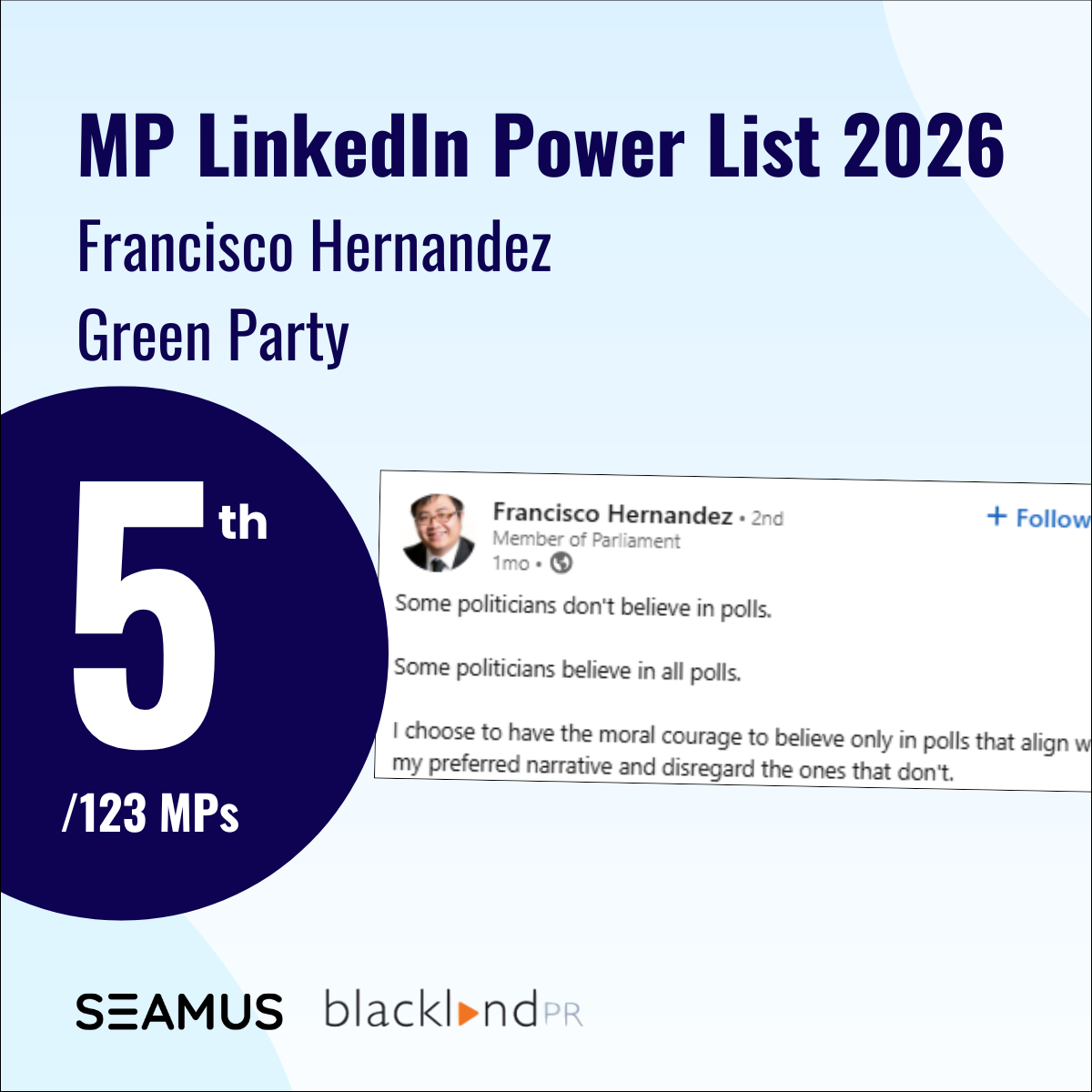
Francisco Hernández
Perhaps the funniest MP on the platform. He brings a refreshingly distinctive voice, doesn’t take himself too seriously, and is happy to engage with others in the discussion.
What we found
WHO IS ACTUALLY USING LINKEDIN WELL?
Perhaps unsurprisingly, National dominates the leaderboard, with National MPs making up 43 of the 91 ranked profiles, including:
6 of the top 10
18 of the top 25
ACT punches well above its weight, with Brooke van Velden (1=), David Seymour (6=), and Simon Court (8=) all in the top 10.
Labour’s presence is strikingly weaker (as is its corporate page - if you can find the official one). The first Labour MP on the list is Duncan Webb ranking at 24, while Labour leader Chris Hipkins comes in at a surprisingly low 68=, with his most recent postdated February 2019.
For the other parties, it’s a mixed bag. The Greens have a standout performer in Francisco Hernández (5) before things drop away. NZ First’s first entry is David Wilson (27=), while Te Pāti Māori is almost completely absent from the platform.
POSTING IS UNEVEN
Of the 91 MPs with a findable LinkedIn profile:
64 posted at least once in 2025
27 didn’t post at all (though some still commented occasionally)
The average MP posted 35 times across the year (skewed by a few posting 200+ times) - but activity was far from consistent.
Instead, many accounts showed a familiar pattern: bursts of posting, followed by weeks or months of silence. That’s likely a reflection of the job, but it also limits momentum and reach.
REAL ENGAGEMENT IS RARE
Only 16 MPs engaged consistently and meaningfully in the comments. Most comment activity was polite but shallow - lots of “well done” and “thanks for having me” comments, with far fewer thoughtful contributions or real discussion.
Only a handful of MPs were willing to debate ideas, push back (we see you Chris Bishop), or add genuine value or views in public.
The dominant pattern is still “post and ghost”, which is disappointing when genuine questions are being asked.
CONTENT IS STILL MOSTLY REACTIVE
Most MP content falls into predictable categories: announcements, events, visits and photo ops.
This is classic LinkedIn fare - and a perfectly legitimate approach for busy leaders. But because it’s largely reactive, it can lack an overarching narrative or strategic through-line. Relying on major moments also tends to lead to long gaps between posts.
Across the board, there was far less proactive or personal content - the kind that builds voice, connection, and influence over time, and gives citizens and voters a clearer sense of the person behind the job title.
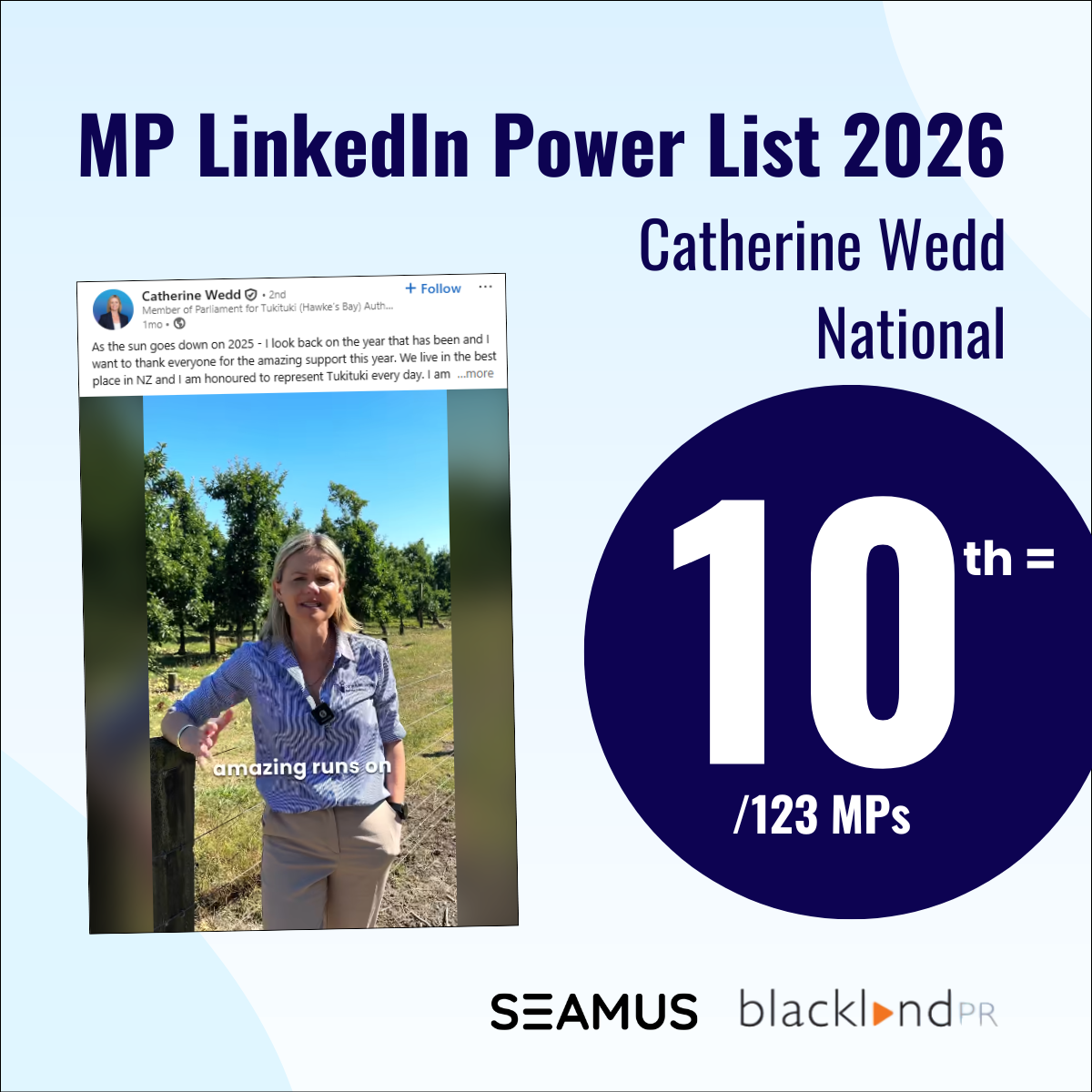
Catherine Wedd
Heavy on video and behind-the-scenes POV content, including interviews with community members, producers, and local businesses across her constituency.
A FEW MPS ARE LEADING THE WAY
A small number have embraced LinkedIn as a modern social platform rather than a noticeboard for press releases.
They’re experimenting with stronger video content, behind-the-scenes posts that show the work (and how they show up in their constituencies), interviewing others on camera, and bringing more warmth, humour, and personality into their tone.
They’re also more willing to share clearer opinions and commentary - and to share the spotlight by celebrating community achievements, colleagues, and partnerships.
The top 25
1= Brooke van Velden, ACT
1= Ryan Hamilton, National
3 Chris Penk, National
4 Christopher Bishop, National
5 Francisco Hernandez, Greens
6= David Seymour, ACT
6= Simon Watts, National
8= Christopher Luxon, National
8= Simon Court, ACT
10= Catherine Wedd, National
10= Tom Rutherford, National
12 Andrew Hoggard, ACT
13 Todd Stephenson, ACT
14= Cameron Brewer, National
14= Nancy Lu, National
14= Scott Simpson, National
17= Andrew Bayly, National
17= Nicola Willis, National
17= Simeon Brown, National
20= Joseph Mooney, National
20= Louise Upston, National
20= Tama Potaka, National
23 Erica Stanford, National
24 Duncan Webb, Labour
25 Shane Reti, National
Lessons for the parties
The LinkedIn analysis reveals significant strategic opportunities – and some uncomfortable gaps – for New Zealand’s political parties.
NATIONAL: ROOM TO CAPITALISE
National has the largest audience on LinkedIn, with a substantial and naturally friendly business base that already leans centre-right.
That’s a valuable strategic asset, but one that National isn’t fully capitalising on. Too much content remains reactive – announcements, press releases, event coverage – rather than using LinkedIn to seed ideas or shape conversations early on.
National MPs have the reach. The opportunity now is to be more deliberate about leading discussions and showing up as thought leaders rather than just newsmakers.
LABOUR: MISSING THE BUSINESS AUDIENCE
Labour’s challenge is more fundamental: they’re barely present where they need to be.
LinkedIn is one of the best platforms available for Labour to demonstrate that it can work constructively with the business community, engage credibly on economic policy, and speak to voters who don’t see themselves reflected in traditional Labour messaging.
Yet Labour’s LinkedIn presence is strikingly weak, with infrequent posts and almost non-existent engagement. For a party trying to rebuild its economic credibility and broaden its appeal, this is a missed opportunity.
ACT: KEEP DOING WHAT WORKS
ACT’s performance on LinkedIn is exactly what you’d expect – and exactly what it should be.
ACT MPs are heavily represented in the top rankings, posting consistently, engaging actively, and speaking directly to an audience that is overwhelmingly sympathetic to ACT’s positions. The challenge for ACT is consistency and scale. More MPs could be posting regularly, amplifying each other’s content and maintaining momentum.
MPs need to keep showing up, using LinkedIn to reinforce credibility with the business community and centre-right professionals who are already inclined to listen.
NZ FIRST AND TE PĀTI MĀORI: PROBABLY THE RIGHT CALL
For NZ First and Te Pāti Māori, minimal LinkedIn presence makes strategic sense.
LinkedIn skews professional, urban, and younger – demographics that don’t align strongly with either party’s core base. NZ First’s audience is more likely to engage via traditional media or direct contact. Te Pāti Māori’s focus is rightly on face-to-face community engagement and platforms where Māori voices and kaupapa are centred.
Both parties are better served focusing resources elsewhere.
GREENS: UNDERUTILISING A NATURAL BASE
The Greens face a similar issue to Labour – but with arguably even more at stake.
LinkedIn has a large and active community interested in core Green values such as sustainability and social equity. There are thousands of public servants and purpose-driven business leaders who would likely be receptive to Green messaging – if it showed up consistently.
Instead, the Greens have one standout performer (Francisco Hernández) and then very little after that.
This is a platform where the Greens could be leading conversations on its key strengths such as climate action. Instead, those discussions are being driven by consultants, academics, and corporate sustainability professionals. It’s a wasted opportunity to build influence, demonstrate policy depth, and reach a new audience of voters who care about these topics.
Lessons for leaders
LinkedIn is a leadership platform. The strongest performers treat it as a place to regularly show judgment, personality, and credibility - not just announcements.
Consistency matters more than volume. A steady presence builds trust and influence over time.
Lessons for employees
LinkedIn is one of the few places where professional visibility still compounds.
Employees who share expertise, contribute to discussion, and show personality (appropriately) build networks and reputation faster than those who stay silent.
Adding value is often more effective than self-promotion - content that shows context, insight, explanation, or perspective.
Lessons for organisations
LinkedIn can’t be treated as just a job noticeboard anymore.
Influence on the platform increasingly comes through people. Personal accounts consistently outperform brand or corporate accounts, and audiences respond more strongly to individual voice than institutional messaging.
That means the opportunity is to empower your people: give leaders and staff the confidence, guidance, and support to post regularly, comment thoughtfully, and show up as part of the conversation.
The strongest organisational presence is coordinated - with leaders and employees amplifying each other, engaging consistently, and sharing real work in progress, rather than just polished press-release moments.
A joint posting and commenting strategy can dramatically extend reach, credibility, and trust with strategic audiences.
About us
Seamus Boyer is a digital communications consultant specialising in strategic storytelling and social media for the public sector. He works with central and local government clients across New Zealand and Australia, helping them build clear narrative direction and operate confidently in high-scrutiny online environments. Before entering the world of communications, he spent a decade in journalism as areporter, news director, and editor.
BlacklandPR specialises in persuasive conversation with real people. We combine the smarts and thinking of a modern consultancy, with deep insights into what makes ordinary New Zealanders tick. We help organisations persuade audiences in every part of New Zealand, through incisive and practical strategies. We are some of New Zealand’s most adept media practitioners, having managed public profiles for public and private sector organisations of all sizes.